
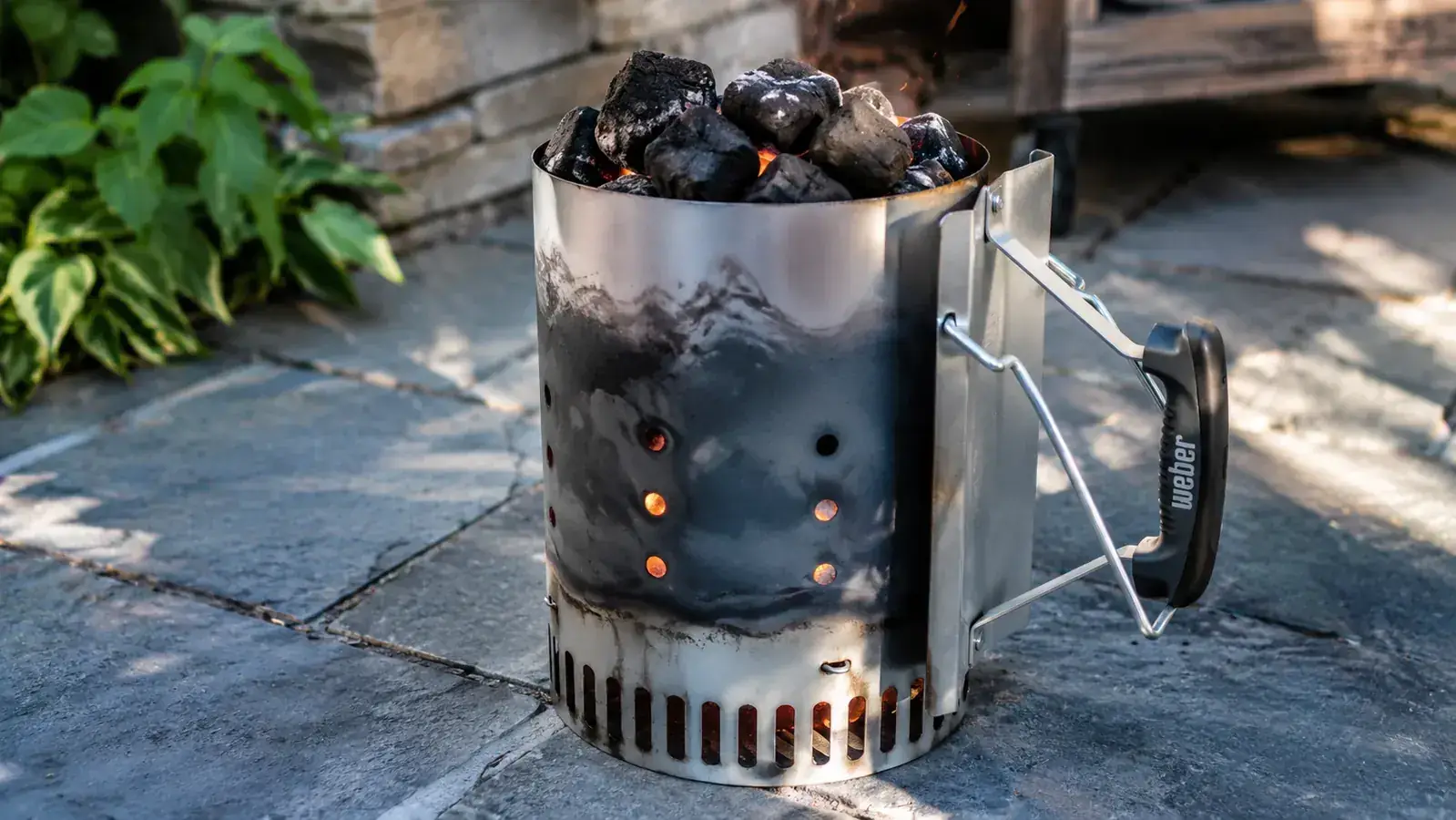
I have been around charcoal long enough to remember when the routine was: squirt lighter fluid, wait five minutes, light a match, wave your hand at the smoke, and eat at 9 p.m. because the coals never really got hot. Then somebody handed me a chimney starter at a neighbor's cookout and I felt like an idiot for not using one sooner. The Weber Rapidfire Compact Chimney Starter is what I have used ever since. But here is the thing. I have seen a lot of people buy this tool, run into a completely avoidable problem in the first week, and then wonder if they got a defective unit. They did not. They just did not know a few things that 42,000 reviews somehow managed to skip over.
This review is not here to pile on more five-star praise. The product earns its rating. What it is here to do is fill in the gaps, so you know exactly what you are buying, what it will not do, and how to get the most out of it from the first session. If you want a thorough breakdown of long-term performance and durability after two-plus years of steady use, check out the full long-term review over at the Weber Rapidfire Chimney Starter long-term review. This one is going somewhere different.
The Quick Verdict
The Weber Rapidfire Compact is the best small chimney on the market, but it is a compact, not a full-size, and a few real-world quirks will trip you up if nobody warned you about them first.
Amazon Check Today's Price →If your charcoal routine still involves a can of lighter fluid, this inexpensive tool is the fix.
The Weber Rapidfire Compact Chimney Starter lights your coals in under 15 minutes with nothing but newspaper. Check today's price on Amazon before you buy another bottle of lighter fluid.
Amazon Check Today's Price on Amazon →The One Thing the Box Does Not Say Clearly Enough
Let me get right to it. The product you are buying is called the Rapidfire Compact Chimney Starter. The key word is compact. Weber also makes a full-size version that holds roughly 100 briquettes. The compact holds about 80. That difference matters a lot if you are cooking on a 22-inch kettle grill, a large offset smoker, or any grill that needs a generous coal bed to hit high searing temperatures across the full cooking surface.
I tried to sear four ribeyes on my 22-inch Weber kettle with a single compact chimney load and ended up with an uneven fire that petered out before I finished the cook. The compact load just does not produce enough coals to fill that much grill space at full heat. Once I started using two compact chimneys at once, or switched to the full-size for big cooks, everything clicked. If your grill is a smaller 18-inch kettle or a portable unit, the compact is perfectly sized. If you regularly cook for six or more people on a full-size grill, know going in that you may want the larger chimney instead.
What Happens When the Newspaper Burns Out Too Fast
A chimney starter needs something to burn underneath the coals to start the chain reaction. Most instructions say to use two sheets of newspaper. Here is what nobody writes in the reviews: thin, glossy newspaper pages and flimsy grocery store circulars burn too fast and do not sustain a long enough flame to catch the bottom layer of coals reliably. You need actual dense newsprint, or ideally a paraffin fire-starter cube, which costs about two dollars for ten of them.
The first time I used this chimney I grabbed a piece of paper from a sale flyer, lit it, and watched it turn to ash in about 45 seconds. The coals on the bottom caught slightly but the ones in the middle never got going. Twenty minutes later I had a chimney half full of warm but not lit coals. I re-stuffed with real newspaper and it worked fine. Lesson learned: use heavy newsprint, use two or three layers, or skip the hassle entirely and tuck a paraffin cube under the grate. That single change makes the 15-minute promise actually true.
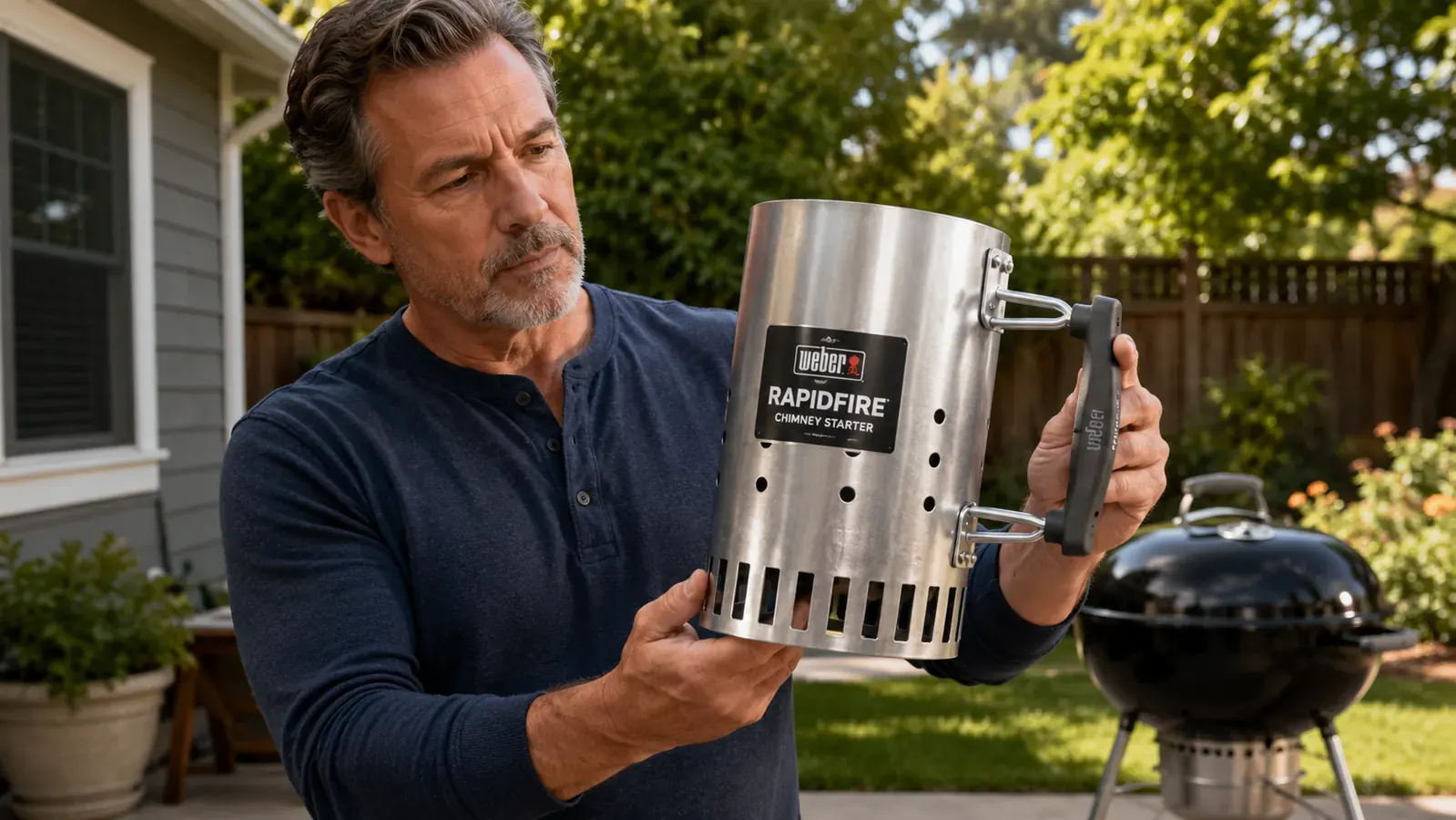
Wind Is the Chimney Starter's Kryptonite
In calm or mild conditions, this thing is excellent. On a breezy afternoon, it gets complicated. The airflow that makes a chimney starter work relies on a controlled draft from the bottom up through the coals. When the wind is gusting from the side, it disrupts that draft, blows the flame away from the coals, and can push heat out before it does its job. I have had sessions where a 15-minute light-up turned into 30 minutes of fighting an inconsistent fire because the wind was working against me.
The fix is simple: position the chimney so the bottom opening faces into the wind. That sounds counterintuitive but it turns a problem into an advantage. The wind drives air straight up through the coals and you actually get a faster light than on a calm day. It took me three frustrating cooks to figure that out. Now it is the first thing I think about when I set up. Worth knowing before your first use.
Point the bottom opening into the wind. It sounds backward, but the draft becomes your best friend instead of your biggest problem.
Briquettes vs Lump in This Chimney: They Are Not the Same Experience
Most of the reviews on Amazon are from people using standard briquettes. If you use lump charcoal, the experience is noticeably different and most of the time better, but it also trips people up in a specific way. Lump charcoal varies wildly in chunk size. Large irregular pieces may not pack down well into the chimney and you can end up with big air gaps that let the fire go out before it catches consistently. Smaller, more uniform lump charcoal works great. Restaurant-grade lump charcoal with consistent sizing is even better.
The practical upside of lump in a chimney is that it lights faster than briquettes, burns hotter right out of the gate, and does not have the binders and fillers that briquettes use. For a quick weeknight sear, lump is outstanding. For a long slow cook where you want consistent steady heat, briquettes are more predictable. The chimney handles both well once you understand how each type of charcoal behaves inside it.
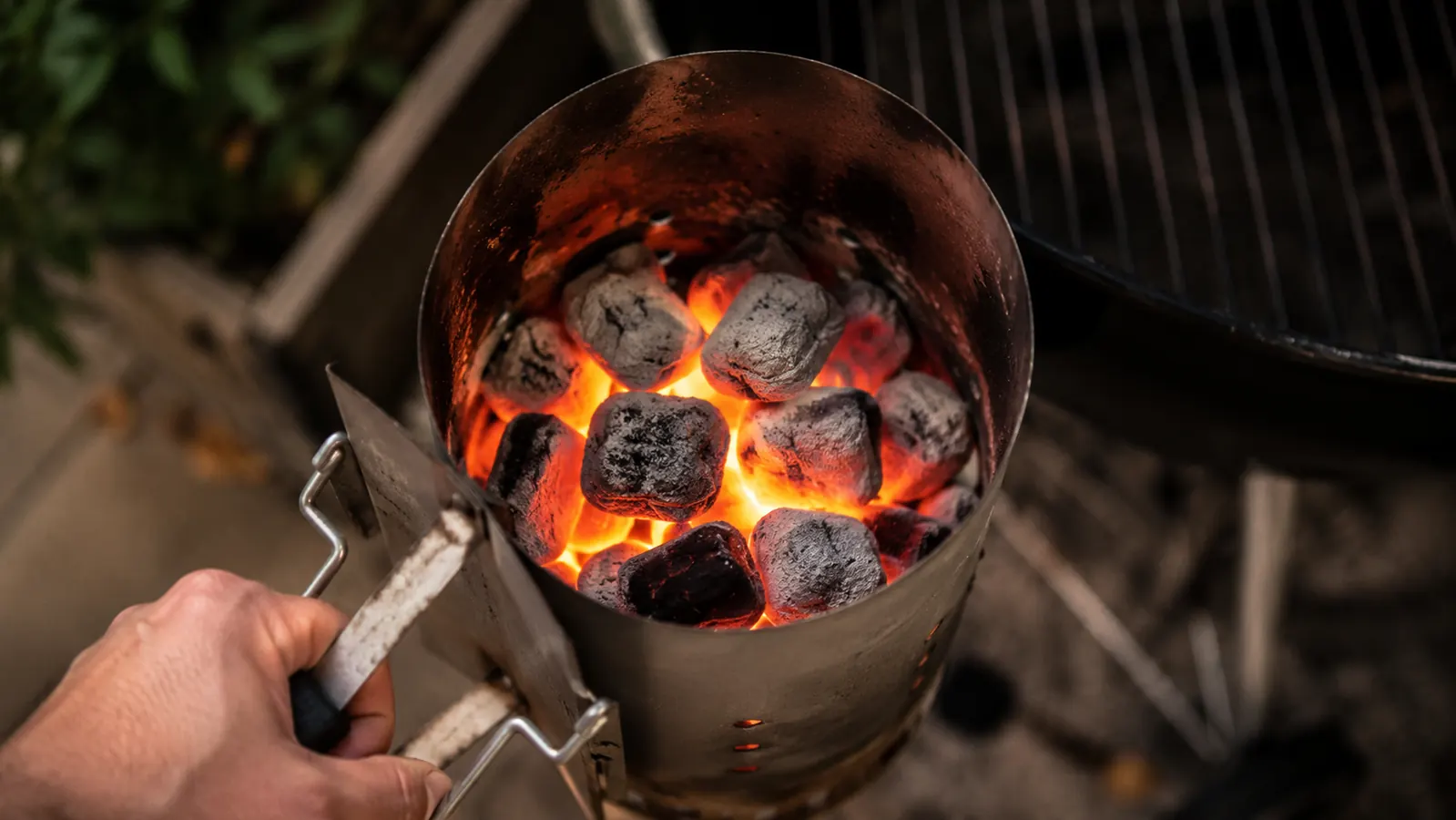
The Handle Gets Hot and Most Reviews Do Not Mention How Hot
The Weber Rapidfire has a steel handle with a phenolic grip and a folding secondary handle for pouring. Both are designed to stay cool enough to hold. In practice, the folding pour handle gets warm after the coals are fully lit, and if you have a habit of setting the chimney down on a hot surface and then picking it up again without thinking, you will get a surprise. It is not dangerously hot in normal use, but it is warm enough that I reach for a grill glove every single time, without exception.
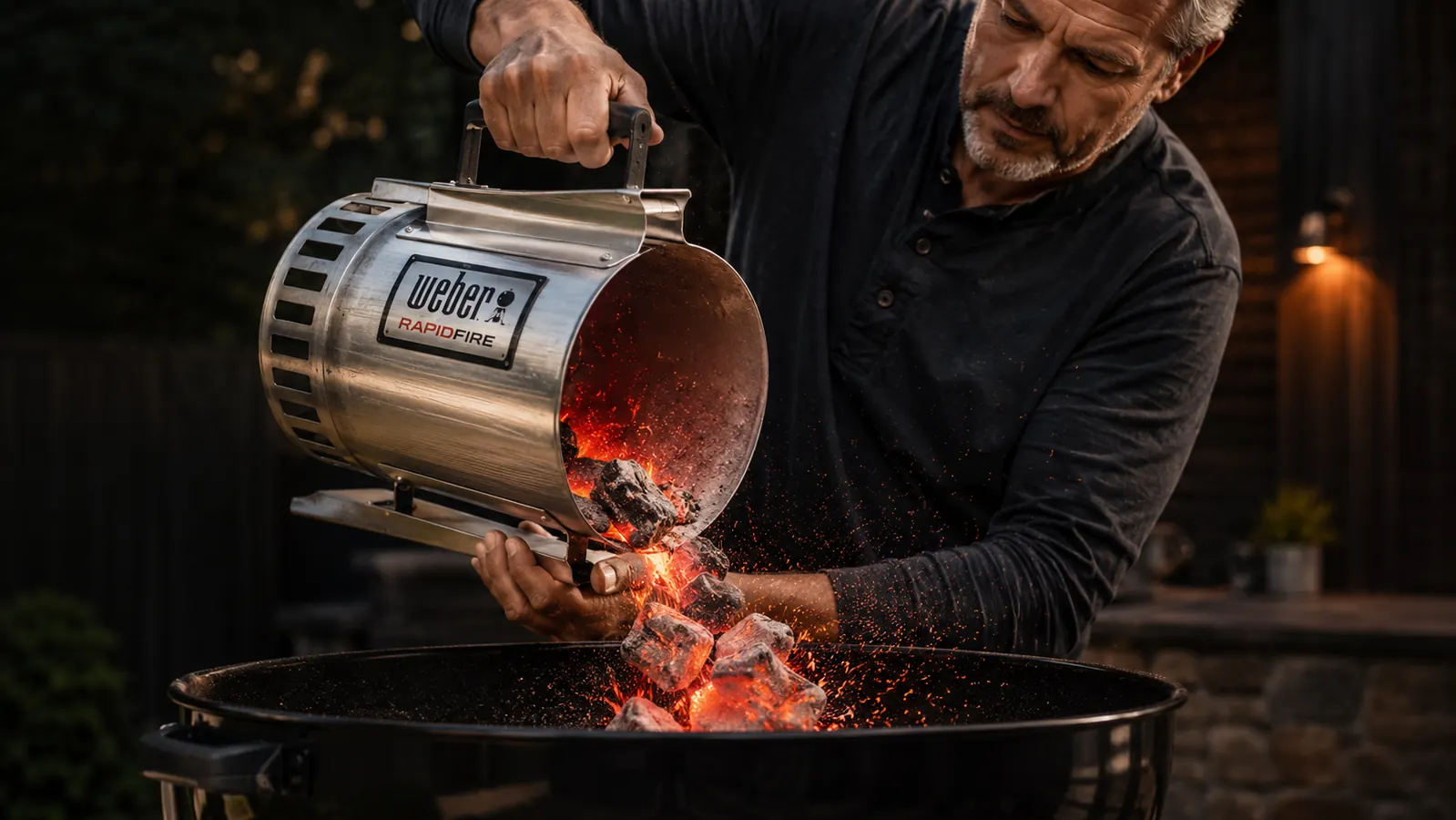
The other handle thing nobody mentions: pouring a full compact chimney of lit coals into a grill is a two-hand job. You grip the main handle and use the folding pour handle to tilt and direct the coals. If you are doing this for the first time without a glove on your pour hand, you will realize quickly why that second handle gets any heat on it at all. Use a grill glove on both hands for the pour. This is especially true in summer when ambient heat is already working against you.
The Rust Inside the Basket Is Normal, and Nobody Tells You That Either
After a full season of regular use, the interior wire grate at the bottom of the chimney will develop surface rust. The outside of the chimney may show some spotty oxidation too. A lot of people see this and panic, thinking they got a bad unit or that the chimney is wearing out. It is neither. The interior is exposed to high heat and ash moisture repeatedly, and surface rust on steel cooking equipment is normal cosmetic wear, not structural failure.
I have used mine through two full grilling seasons. The inside grate is rusty. The chimney still works exactly the same as the day I bought it. The rust does not transfer to your food because the charcoal sits above the grate and the coals are already burning hot by the time you pour them. If you want to slow the oxidation, dump the ash every time and do not store the chimney with ash residue sitting inside it. Moisture trapped in ash speeds up the process. A quick shake-out after every cook adds years to the life of the tool.
Why Cheap Chimney Starters Fail and This One Does Not
I have tried three no-name chimneys from discount stores over the years. All three had the same flaw: the wire bottom grate that holds the coals above the newspaper was too fine, clogged with ash after a few uses, and restricted the airflow that makes the whole system work. Less airflow means slower lighting, which means more newspaper, which means more frustration. The Weber uses an open, widely-spaced grate that allows aggressive airflow without clogging, and it is built from heavy enough steel that it does not warp at the temperatures involved.
The other failure point on cheap chimneys is the handle attachment. Three times out of three, on the no-name units I tried, the handle rivets or welds started to loosen before the end of the first season. Pouring lit coals with a chimney that has a wobbly handle is not a situation you want to be in. The Weber handle has stayed solid through two years of hard use. The construction quality is not flashy, but it is right where it needs to be.
What We Liked
- Lights charcoal in 12 to 15 minutes without lighter fluid or chemicals
- No chemical taste in your food, ever
- Works with both briquettes and lump charcoal
- Heavy-gauge steel construction stays solid through years of use
- Wide-spaced bottom grate maintains strong airflow and resists ash clogging
- Easy one-step pour with the folding secondary handle
- Compact size is ideal for 18-inch grills and smaller portable charcoal units
Where It Falls Short
- Compact size is genuinely small. Not enough coals for a large 22-inch grill at full heat without two loads
- 15-minute claim requires good newspaper or a paraffin cube. Glossy flyers and thin paper will fail you
- Wind disrupts the draft and slows lighting unless you position the opening into the breeze
- Surface rust inside the basket appears after a full season of use
- Both handles get warm during the pour. Grill gloves required every time
Who This Is For
If you own a charcoal grill of any size and you are still using lighter fluid, this tool is for you. Full stop. The Weber Rapidfire Compact is especially well-matched to anyone with an 18-inch kettle, a portable tailgate grill, a small hibachi, or any compact charcoal setup where a single load of about 80 briquettes covers the coal bed. It is also a great second chimney to run alongside your full-size chimney when you are cooking for a crowd and need a faster way to top up the fire mid-cook. At the current price, it is the kind of tool you can pick up as a spare and never regret it.
If you are new to charcoal grilling and trying to figure out the whole process, the step-by-step breakdown over at how to light charcoal fast without lighter fluid walks you through exactly how to use a chimney starter from scratch, including newspaper technique, coal positioning, and knowing when the coals are ready to pour. Read that alongside this review and you will be in good shape from your first cook.
Who Should Skip It
If you primarily cook on a large 22-inch or bigger charcoal grill and you regularly cook big meals for five or more people, the compact version is going to leave you wanting more. Get the full-size Weber chimney instead. It holds roughly 20 percent more charcoal and produces a coal bed that fills a large grill properly. The price difference between the compact and the full-size is a few dollars, and for a larger grill it is absolutely worth it. Buying the compact for a large grill is the most common source of the mild disappointment you occasionally see in the reviews.
If you grill exclusively on a gas grill, you do not need a chimney starter at all. And if you use a pellet smoker, same deal. This tool is for people who cook on charcoal and want to ditch the lighter fluid. Outside of that, it does not have a use case.
Ready to cook without the chemical smell? Here is where to grab the Weber chimney.
The Weber Rapidfire Compact Chimney Starter is budget-friendly on Amazon and ships fast. Check today's price before you go. It moves around a bit depending on the season.
Amazon Check Today's Price on Amazon →