
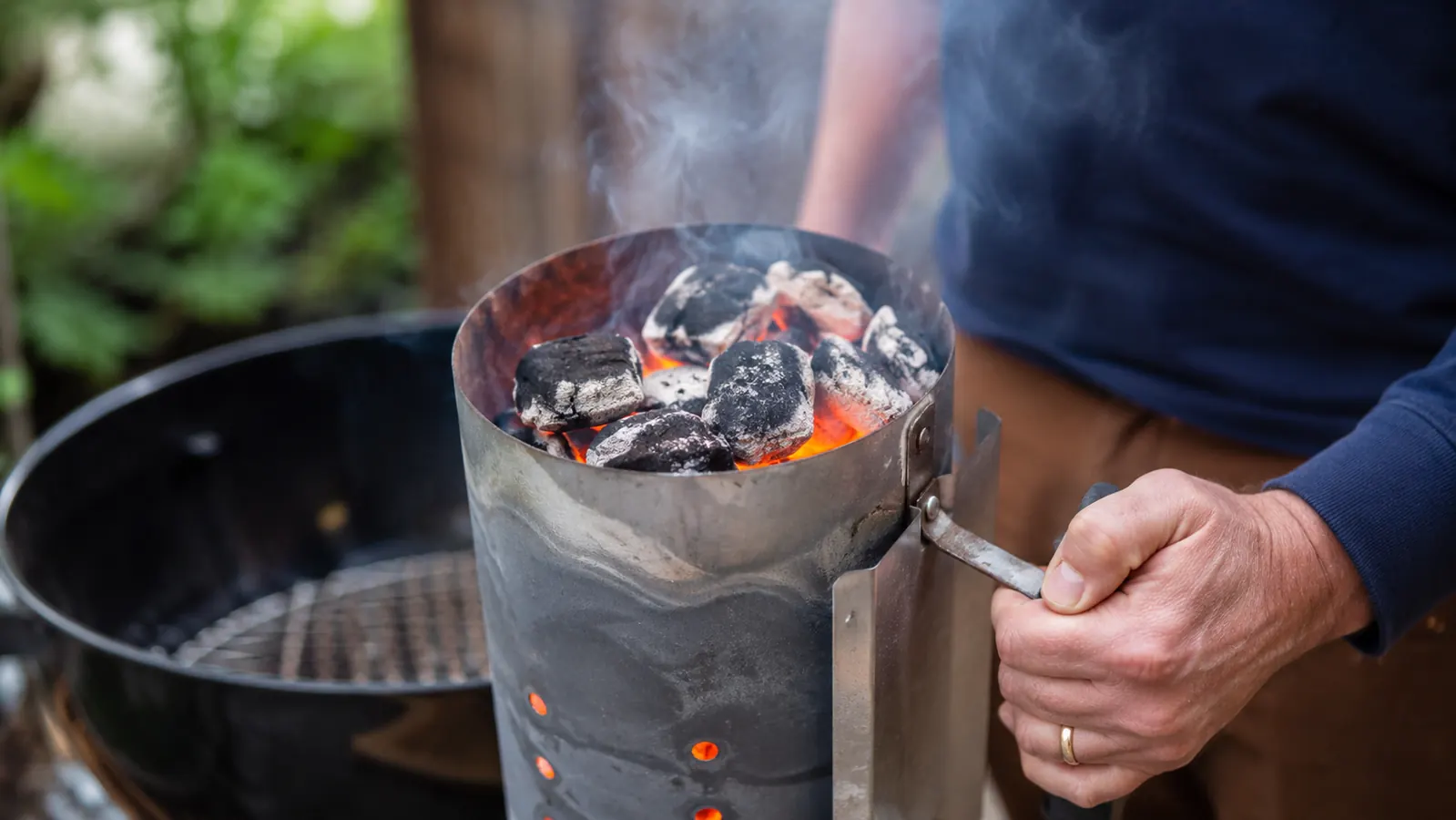
I used lighter fluid for the first five or six years I had a charcoal grill. I figured everybody did. You douse the coals, you wait, you light a match, you back up fast. Seemed fine. Then a buddy handed me a chimney starter at his place and I had hot coals in 12 minutes flat, no chemicals, no flare-up, no waiting around for the fluid smell to burn off. I drove to the hardware store on the way home. That was the last bottle of lighter fluid I ever bought.
The Weber Rapidfire Compact Chimney Starter is the one I use and the one I hand to people when they ask. It is simple, it lasts for years, and it costs less than two bottles of lighter fluid. Below are the 10 reasons I have never looked back, and why you probably should not either.
Stop fighting your coals every weekend. The Weber chimney starter ends the wait and the chemical taste for good.
Rated 4.8 stars by over 42,000 backyard grillers on Amazon. Lights a full load of charcoal in under 15 minutes using nothing but newspaper.
Amazon Check Today's Price on Amazon →Your food stops tasting like petroleum
This is the big one. Lighter fluid is a petroleum distillate. Even when you let the coals ash over completely, residual compounds stay in the charcoal and transfer into the smoke that hits your meat. You might not notice it every time, but you will notice when it is gone. I did chicken thighs the first weekend I switched and my wife asked what I had changed. Nothing except how I lit the coals. If your food has ever had a faint chemical bite, this is why.
It is actually faster than lighter fluid
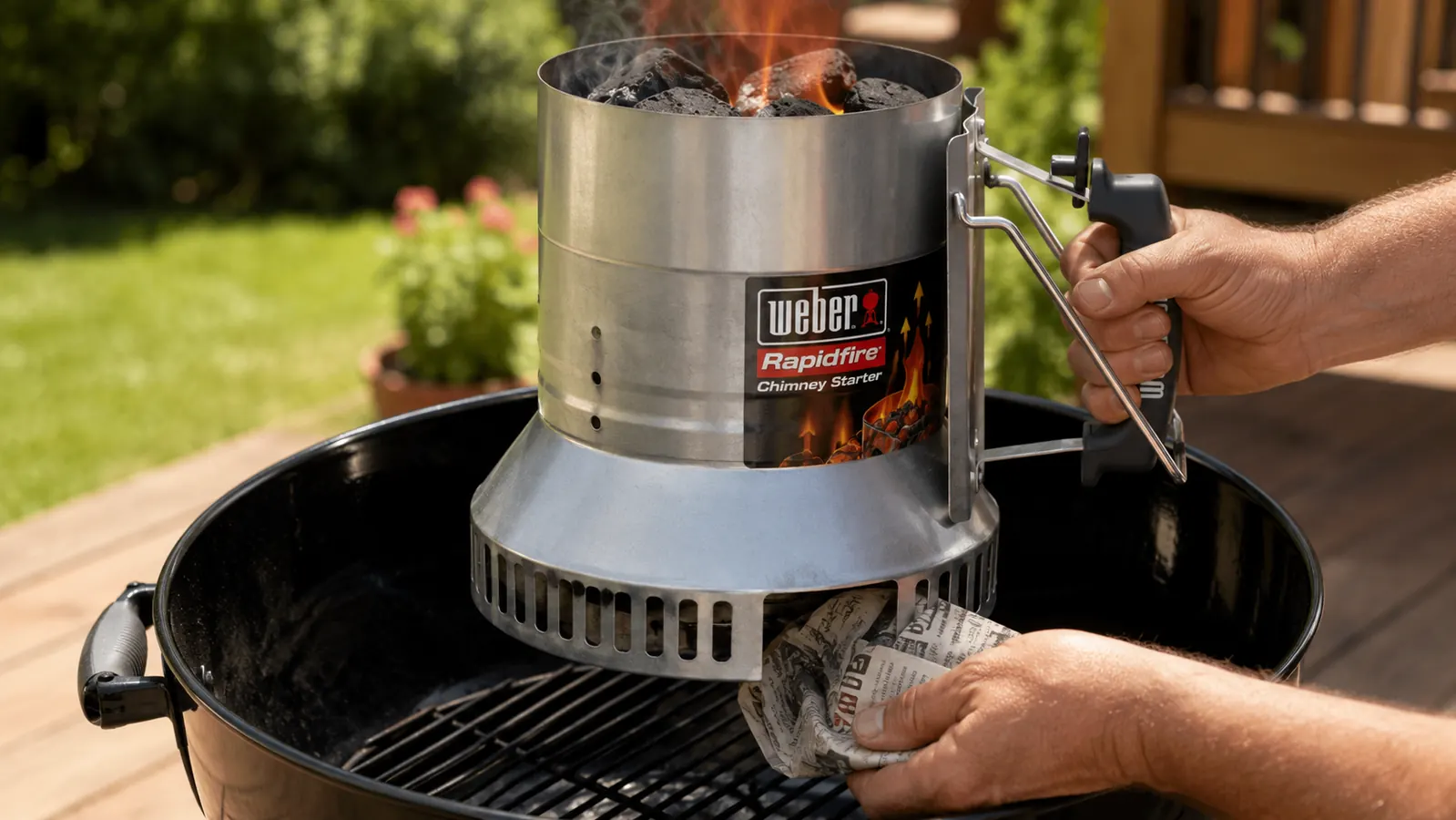
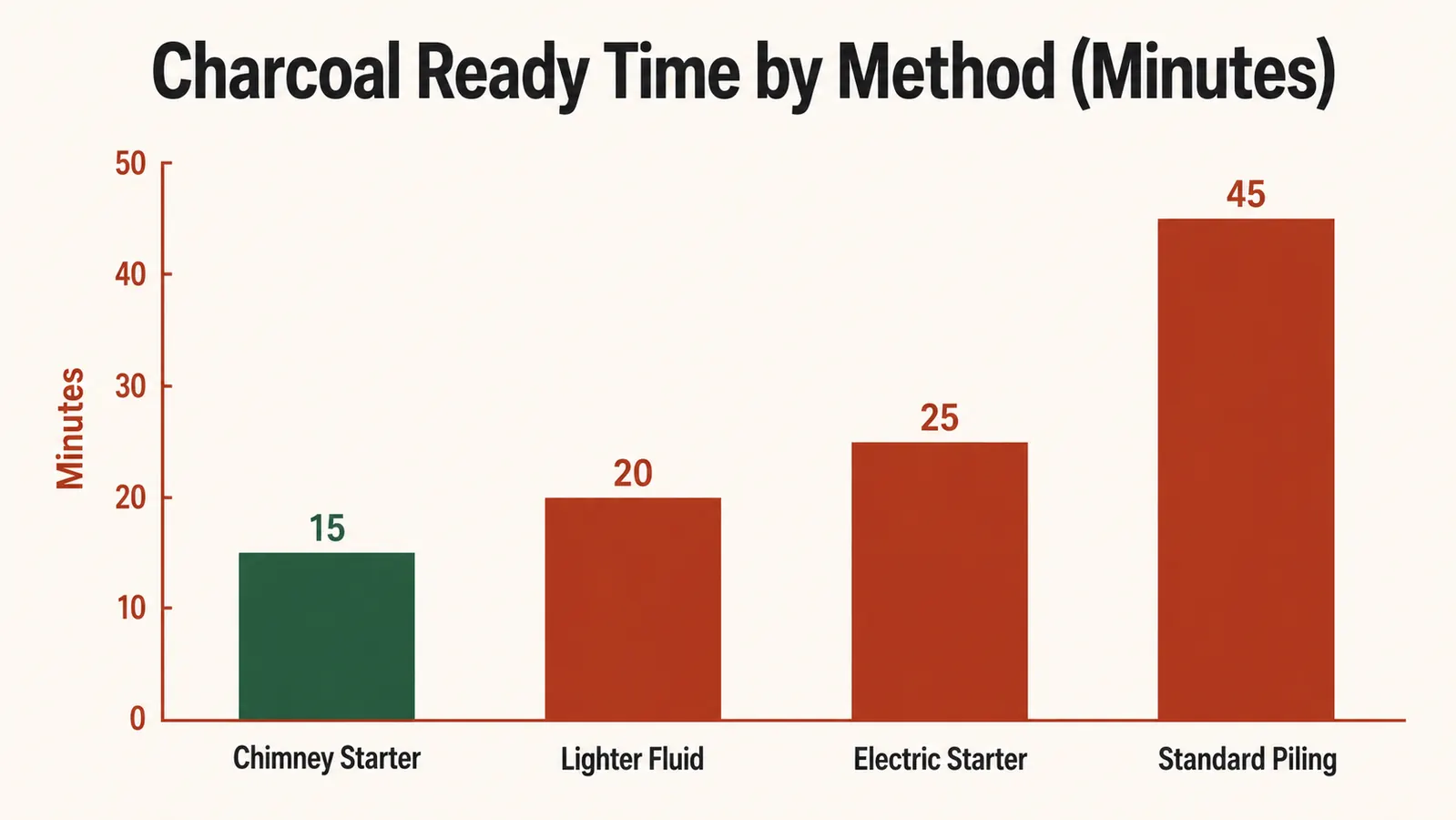
People assume lighter fluid is the quick option. It is not, once you count the full clock. With fluid you soak the coals, wait for them to absorb, light them, wait for the fluid to burn off completely (usually 20 to 25 minutes), and then wait for the ash to form. With a chimney starter you stuff two sheets of newspaper underneath, set it on the charcoal grate, light the paper, and wait 12 to 15 minutes. Full load, ready to cook. I have timed it dozens of times. The chimney is faster every single time.
You only need newspaper to light it
No trips to the store for lighter fluid, no running out mid-summer, no realizing the bottle is empty right as your guests arrive. You need two sheets of newspaper, maybe a single paper bag. That is it. Every house has newspaper or scrap paper. If you really want to upgrade the process, two paraffin fire starters cubes work even better in wind, but plain newsprint is all you actually need.
Amazon See the chimney starter that works with just newspaper →
Every coal lights evenly, not just the top layer
With lighter fluid you tend to get uneven results: the top coals light easily, the ones underneath stay cool longer, and you end up with a patchy heat that creates hot spots and cold spots across the grate. In a chimney starter, the heat rises from the bottom through the entire column of coals. By the time you pour them out, every coal is fully lit and uniformly glowing. That even heat makes a real difference for consistent cooking results.
Amazon Get the Weber chimney starter for even, reliable heat →
No more flare-up risk from leftover fluid
Lighter fluid and fire are a combination that requires some respect. Pour too much, wait too little, and you get a flare that can singe eyebrows and send people backpedaling. The chimney starter removes that variable entirely. The paper burns inside the chamber, the coals catch from the heat, and there is nothing flammable sitting on top of the coal bed when you light it. Safer setup, full stop.
Amazon See why 42,000 grillers trust the Weber chimney starter →
I did chicken thighs the first weekend I switched and my wife asked what I had changed. Nothing except how I lit the coals.
It doubles as a charcoal measuring cup
The Weber Rapidfire holds a measured amount of charcoal so you get consistent volume every cook. One full load is about right for a standard Weber 22-inch kettle. If you want a smaller fire for a quick sear session, fill it halfway. You stop guessing how many coals to use and start getting predictable fire every single time. That kind of consistency is how you go from okay weekend griller to the person your neighbors ask for advice.
Amazon Check today's price on the Weber Rapidfire chimney starter →
It works in wind, lighter fluid struggles
Wind is your enemy when you are trying to hold a lighter flame to fluid-soaked coals. Half the time the flame blows out before it catches. A chimney starter solves this because the fire is enclosed inside a metal cylinder with a protected bottom chamber. You can light newspaper in moderate wind with no problem. I have used mine on some breezy afternoons that would have had me chasing a lighter around the patio the old way.
The cost pays for itself in one summer
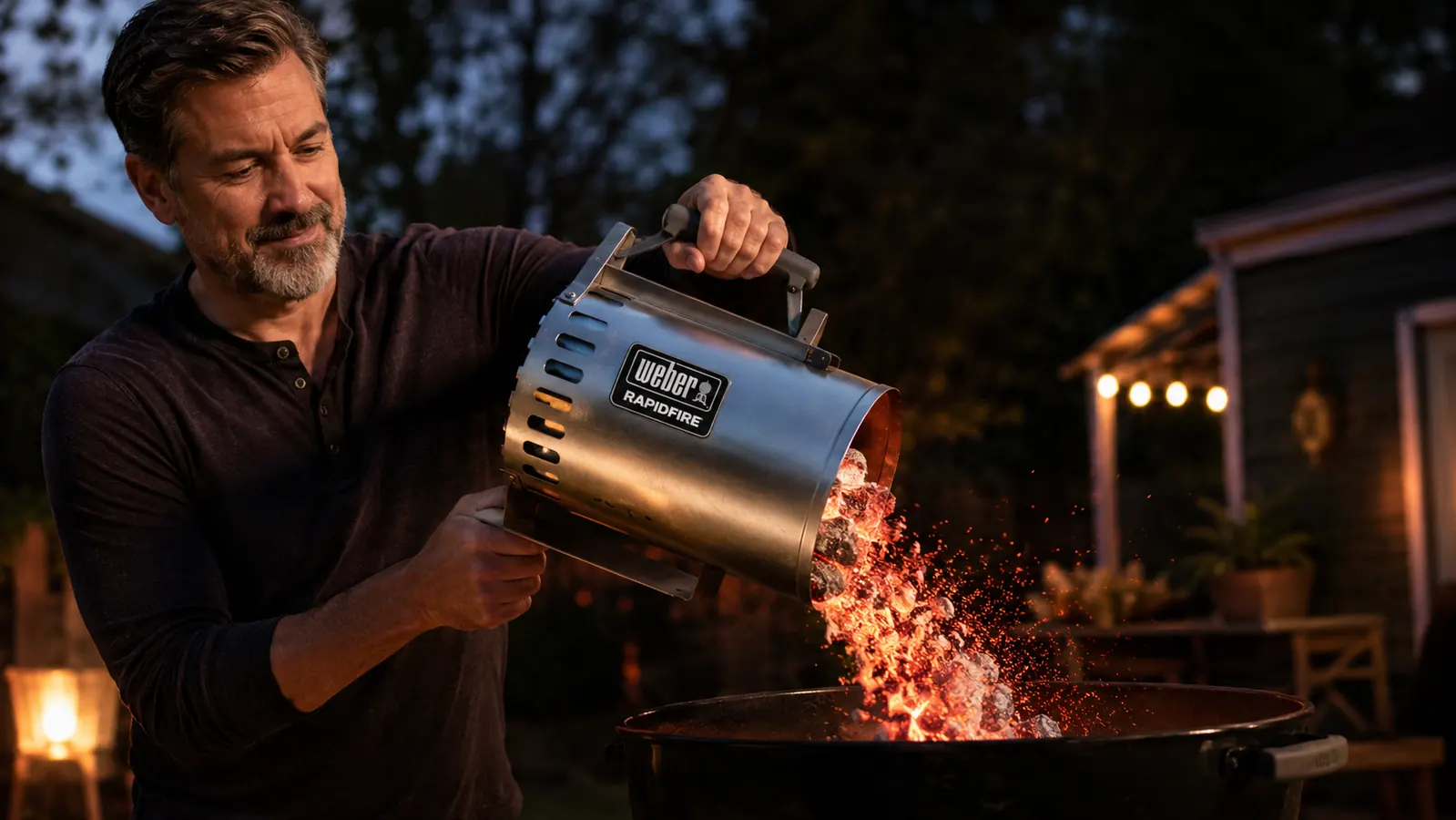
Lighter fluid runs two to four dollars a bottle and you need roughly one bottle per two or three cook sessions depending on how heavy-handed you are. A chimney starter costs about thirteen dollars and lasts for years with no moving parts to break. By mid-summer you have already broken even and you are cooking better food to boot. It is one of those gear decisions where the math is obvious once someone lays it out.
It makes you a more confident griller
There is something about the chimney process that puts you in control. You pack the coals, light the paper, watch the chimney do its job, and pour the ready coals where you want them. No uncertainty, no is-the-fluid-burned-off-yet guessing, no raking and poking hoping things light. You know exactly where you are in the process at every step. That confidence flows right into the cook itself. Better lit fire, better heat management, better food.
It is the method every serious pitmaster uses
Walk into any serious BBQ competition tent or backyard where someone really knows what they are doing and you will not find a bottle of lighter fluid. You will find a chimney starter. That is not a coincidence. The people who have cooked the most and cared the most about results landed on this tool because it works. The Weber Rapidfire in particular has over 42,000 reviews on Amazon and a 4.8-star rating because it earns it every single time you use it.
What I Would Skip Instead
The only chimney-starter alternative I have tried that comes close is the electric coal starter. It works, but you need an outdoor outlet nearby, the heating element wears out over time, and it takes about the same amount of time as a chimney anyway. If you want to compare them directly, I broke down the full timing and tradeoffs in my chimney vs electric starter comparison. Short version: the chimney is simpler, costs less, and requires no electricity. For most backyards it is the better pick.
By mid-summer the chimney starter has already paid for itself and you are cooking better food to boot.
Ready to light your next cook in 15 minutes with no chemicals and no guesswork?
The Weber Rapidfire Compact Chimney Starter is what I use at every single cook. Under thirteen dollars, built to last, and it makes real, clean charcoal fire every time you need it.
Amazon Check Today's Price on Amazon →