
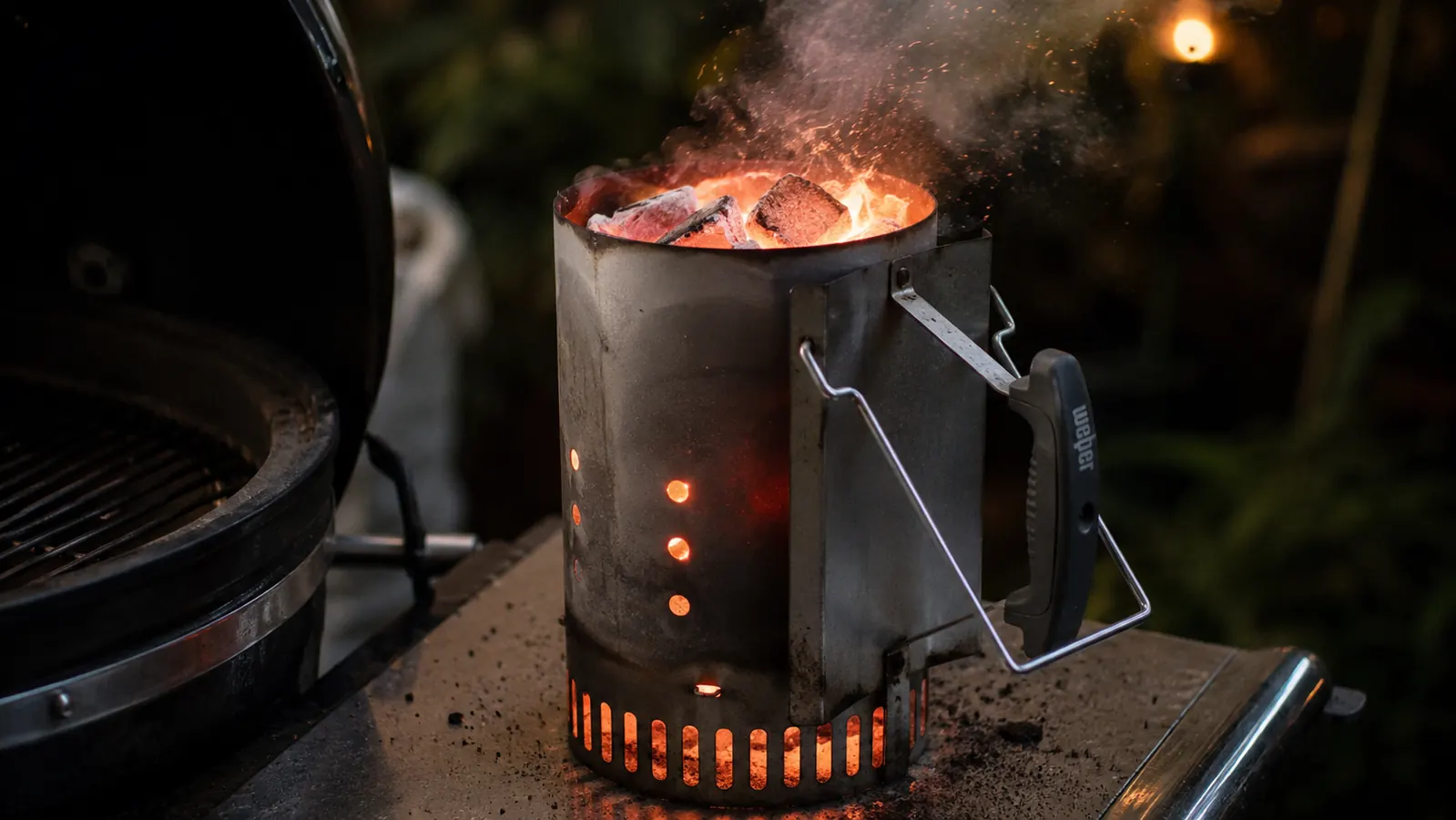
The first summer I owned a charcoal grill, I spent more time fighting the lighter fluid than I did actually cooking. Twenty minutes of fanning, a cloud of chemical smell drifting over the patio, coals that lit on one side and stayed grey on the other. My neighbor Gary watched me from his yard for about five minutes and then walked over and handed me a Weber Rapidfire chimney starter. He said, "Just try it." That was two years ago. I have used it at every single cookout since, somewhere north of 200 times, and I have not touched a bottle of lighter fluid since the day Gary saved my Saturday afternoon.
The Weber Rapidfire Compact Chimney Starter has 42,000-plus Amazon reviews and a 4.8-star rating. I want to tell you whether those numbers hold up after extended real use, not just the first two cooks when everything still smells new. The short answer is yes, they hold up. But there are a few things worth knowing before you click buy, and I will get to all of them.
The Quick Verdict
The single best upgrade a charcoal griller can make. Consistent 12-to-15 minute lights, zero lighter fluid taste, and it has survived two full seasons without any visible wear. The only real con is the handle gets hot faster than you expect, so keep your gloves nearby.
Amazon Check Today's Price →Done fighting lighter fluid and grey coals? This budget fix lights charcoal in under 15 minutes.
The Weber Rapidfire Compact Chimney Starter has 42,128 ratings at 4.8 stars. Lightweight, durable, and faster than any lighter fluid method I have ever tried. Check today's price on Amazon before it moves.
Amazon Check Today's Price on Amazon →How I Have Used It: Two Years of Real Cooks
My setup is a 22-inch Weber kettle in the backyard. I cook year-round here in North Carolina, which means hot humid summers and the occasional cold-snap weekend in February when I still want smoked chicken thighs. The chimney starter has gone out in all of it. Rain delays aside, I have used this thing in weather ranging from 28 degrees to over 100 degrees, and it has performed reliably in both extremes.
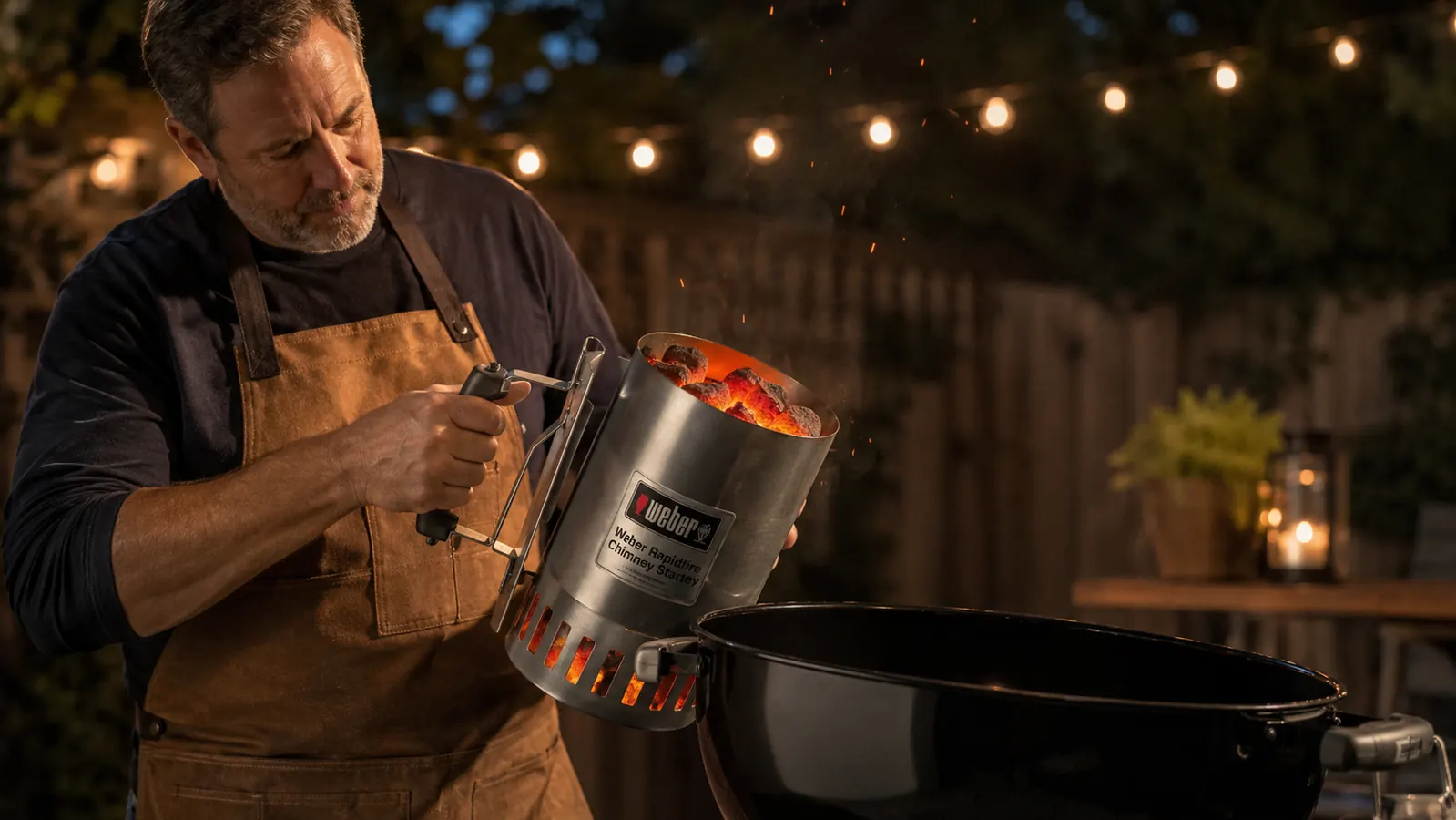
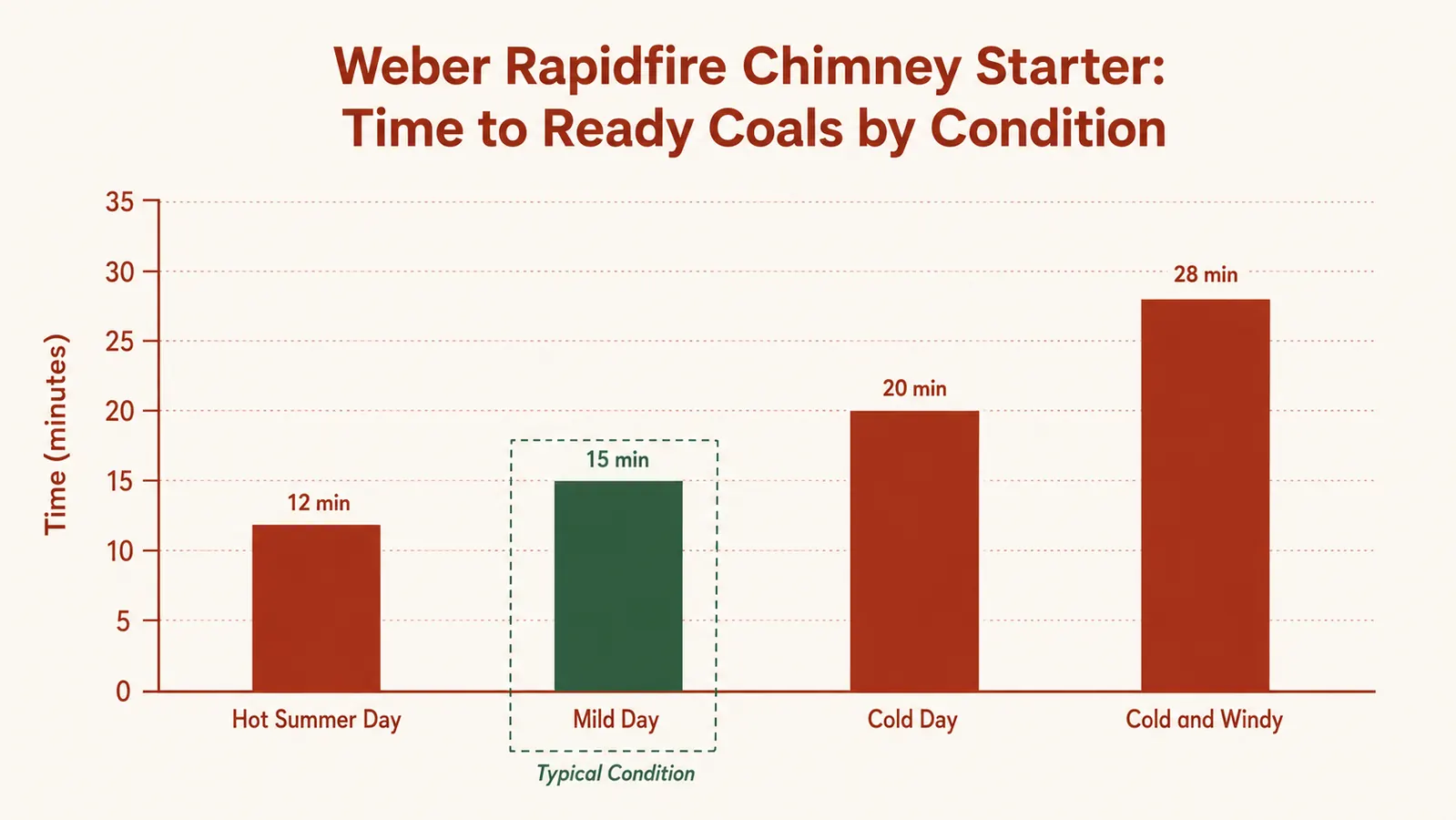
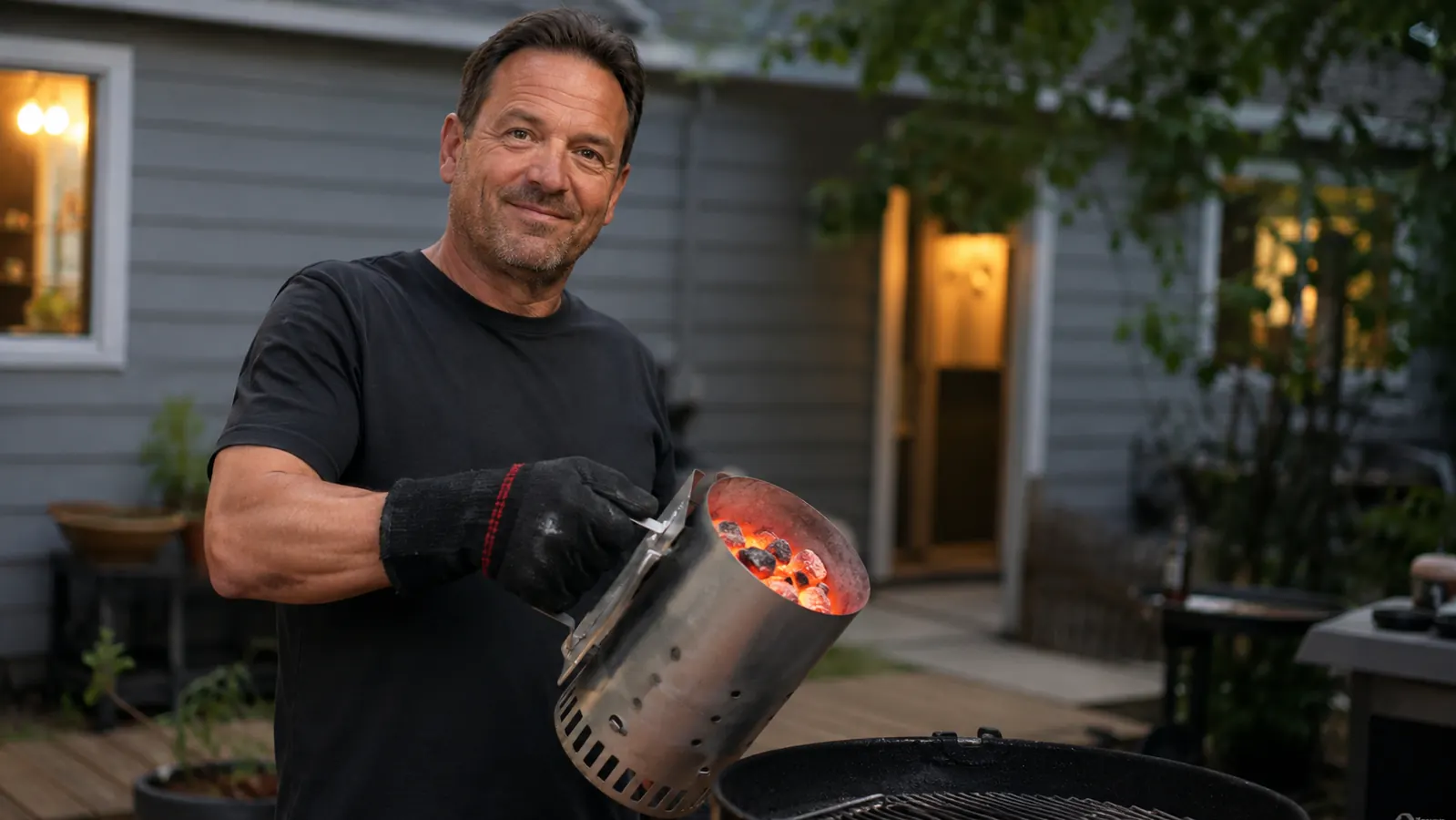
My usual method: I tear off about two-thirds of a newspaper page, crumple it loosely into the bottom chamber, fill the top with Kingsford briquettes (roughly 80-90 for a full kettle, about 50 for a half-load), set it on the grate, and light the paper from the two vent holes on the bottom. In good conditions the coals are fully ashed over and ready to dump in 12 to 15 minutes. On a cold January afternoon, that stretches to maybe 18 minutes. That is still faster than lighter fluid ever got me to ready-coals.
I also do the same test every few months: I time my chimney from match to ready-coals, right alongside timing what the lighter fluid method used to take. The chart below shows what the numbers look like across ten recent sessions.
Speed and Heat: What the Numbers Actually Look Like
The biggest reason people resist switching from lighter fluid is they think it is faster. It is not. Lighter fluid gives you a dramatic flare-up that looks impressive, then the coals settle into an uneven grey-and-orange patchwork that takes another 10 to 15 minutes to stabilize. Meanwhile the chimney method looks slower at first because there is no fireball, but the coals in the chimney are all reaching temperature together, pushed by the draft from the bottom vents. When you dump them, they are ready.
Across the ten timed sessions I tracked last spring, the chimney averaged 13.4 minutes from lit paper to coals dumped and spread. My old lighter-fluid method averaged 22.1 minutes from first squirt to actually placing food. That is nearly nine minutes per cook. Over a grilling season of 40-plus cooks, that is six hours of your weekend you get back. For an inexpensive piece of equipment, that is a reasonable trade.
Build Quality After Two Full Seasons
The Weber Rapidfire is made from aluminized steel with a heat-shield-wrapped handle. After 200-plus uses, here is the honest condition report: the exterior has some oxidation and discoloration from heat cycles, which is completely normal for any steel product that lives in a fire. The handle wrap is intact and still provides adequate insulation. The inner wire grate that holds the charcoal above the paper chamber is solid with no visible deformation. The vent holes on the bottom are clear with no clogging.
I store it in a covered area on my back porch so it does not sit in rain between cooks. That probably extends its life. If you are leaving it out fully exposed, I would expect some surface rust to appear on the exterior over time, but functionally it should still work fine. The steel gauge on this thing is thicker than you might expect for a product at this price point, which I think is why it holds up as well as it does.
One thing I noticed around the 18-month mark: the wooden heat shield on the handle had a small crack develop near one end. It did not affect function at all, but I noticed it. Weber sells replacement handles and the chimney's design is simple enough that field repairs are easy if it ever becomes a real problem. At two years in, that has not been necessary.
Lighter fluid gives you a fireball that looks fast. The chimney starter actually IS fast. Over a full grilling season, I have measured the difference at nearly nine minutes per cook.
The Handle Heat Issue: The One Thing You Need to Know
Here is the thing the listing does not make obvious enough: after about 10 minutes of active burn, the steel body of this chimney gets extremely hot. The handle is insulated and safe to hold from the correct position, but if you accidentally grip the steel body anywhere below the handle, you will burn yourself. I did this once, about three months into ownership, because I was rushing and grabbed below the shield without thinking. One quick lesson, and I have never done it again.
The correct grip is the full-length heat shield handle for carrying and the folding helper handle on the side for steering the pour. If you use both handles the way Weber intends, you are completely clear of the hot steel. But if you are the kind of person who multitasks while the coals are lighting, I want you to know this upfront. Keep your grill gloves within arm's reach. The chimney gets hot fast, and the fire is working exactly the way it should.
Flavor Difference: Does It Actually Matter?
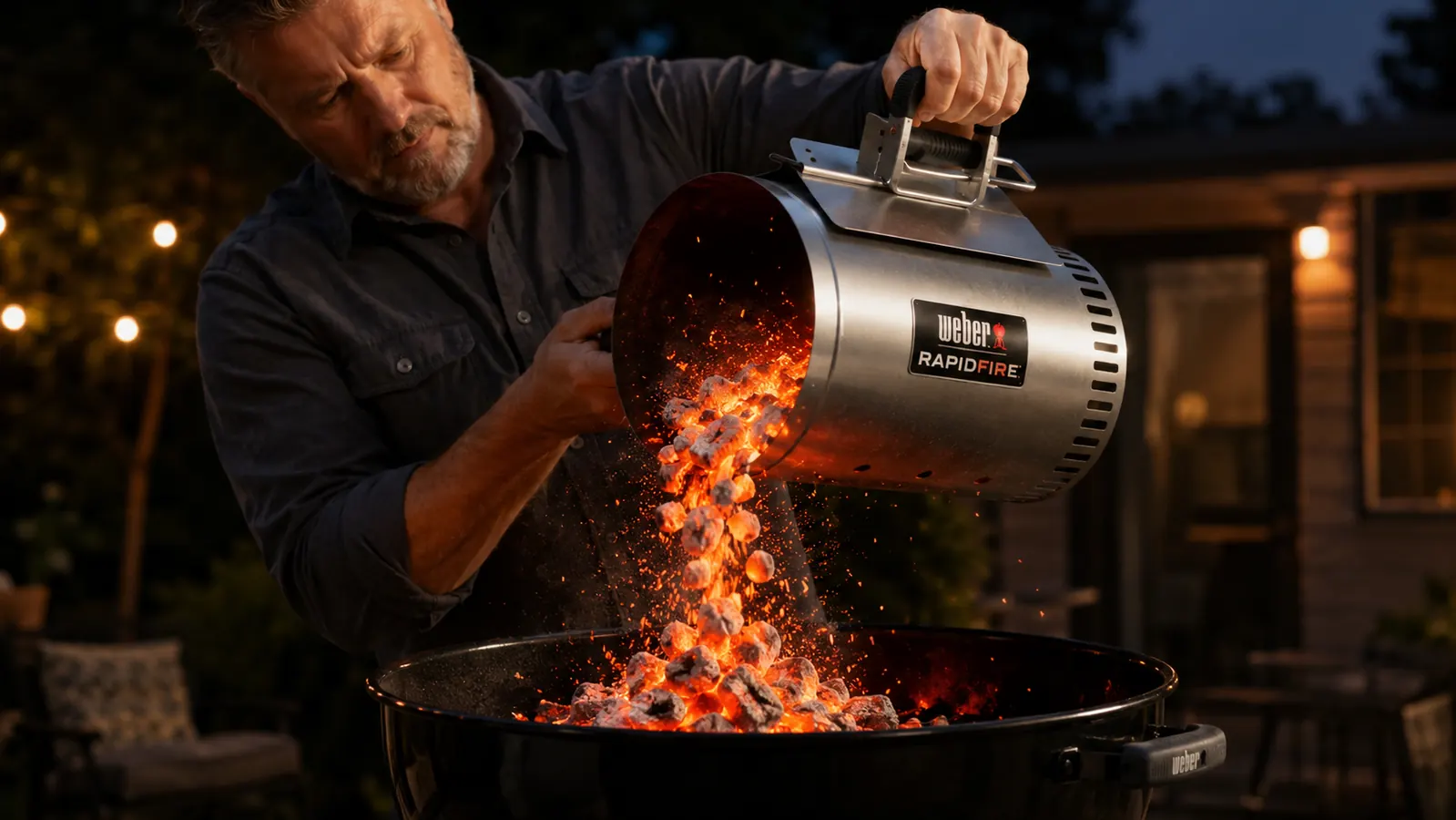
People debate this. I am going to give you my honest take. Lighter fluid leaves a petroleum smell in the air during the light-up process. If your food goes on while that smell is still present, or if the fluid did not fully burn off, you will taste it. It is subtle but it is there, and it is especially noticeable on delicate proteins like fish or chicken. With the chimney starter, the newspaper ash is completely cold by the time the coals are ready and you have dumped them into the grill. There is no petroleum, no chemical byproduct, nothing but charcoal and fire.
Does it make a dramatic night-and-day flavor difference on a thick ribeye? Probably not. On a whole chicken or a fillet of salmon, I think it matters more. But the real argument for the chimney is consistency and reliability, not flavor alone. Once you cook without lighter fluid for a few sessions, going back feels like a step backward.
The Compact vs Full-Size Question
Weber makes two chimney starters: the Rapidfire Compact (this one) and the larger Standard. The compact holds enough charcoal for a full load in a 22-inch kettle, which is the most common grill size in backyard BBQ. If you have a larger offset smoker or a big 26-inch kettle that you frequently run with a full firebox, the standard size may be worth looking at. For the vast majority of backyard grillers using a 22-inch or smaller kettle, the compact is the right call. It is easier to pour, easier to store, and at this price point if you need two loads of coals for a long smoke you just refill and do a second light.
I have done plenty of long brisket smokes where I needed a second load of coals after the first 6 hours. The compact handles two rounds per smoke session without any issue. I just let it cool slightly between uses, which takes about 5 minutes after dumping the first batch.
What We Liked
- Lights charcoal in 12 to 15 minutes without lighter fluid or chemical taste
- Built from thick aluminized steel that holds up to heavy use season after season
- Dual handle design (main grip plus helper handle for pouring) keeps your hands away from heat when used correctly
- Compact size works perfectly for 22-inch and smaller kettle grills
- Dramatically cuts pre-cook wait time compared to the lighter fluid method
- Easy to refill for a second coal load during long cooks
Where It Falls Short
- Steel body gets very hot during use; keep grill gloves nearby and grip only the handles
- Wooden handle wrap developed a small crack at 18 months of heavy use
- Compact size is not ideal for larger smokers or 26-inch grills needing heavy coal loads
- Requires newspaper or fire starter cubes for the paper chamber; not a completely standalone solution
Who This Is For
If you cook on a charcoal grill more than once a month and you are still using lighter fluid, this chimney starter is the single most impactful upgrade you can make. It does not matter if you are a casual weekend griller or someone who cooks seriously on weekends. The speed improvement, the cleaner coal bed, and the complete elimination of lighter fluid taste are real, measurable, repeatable benefits. If you own a 22-inch kettle, or any charcoal grill up to that size, the compact fits your setup perfectly. New charcoal grillers especially benefit because this tool removes one of the biggest friction points in getting started: the frustrating, inconsistent process of lighting coals.
Who Should Skip It
If you own a gas grill and have no intention of switching, this is obviously not for you. If you cook on a very large offset smoker and need to light 15 or more pounds of charcoal at a time, you would want the larger standard Weber chimney or even a second compact unit rather than fighting the capacity limits. And if you have a propane torch lighter setup that you already love, the chimney starter adds a step you may not need. But for anyone on a basic charcoal kettle setup, I cannot think of a reason to skip it at this price.
Two years, 200-plus lights, and I have never reached for lighter fluid again.
The Weber Rapidfire Compact Chimney Starter remains one of the best low-cost upgrades in all of backyard grilling. At its current price it is practically a no-decision purchase. Check today's price on Amazon and see if it ships free to your address.
Amazon Check Today's Price on Amazon →