
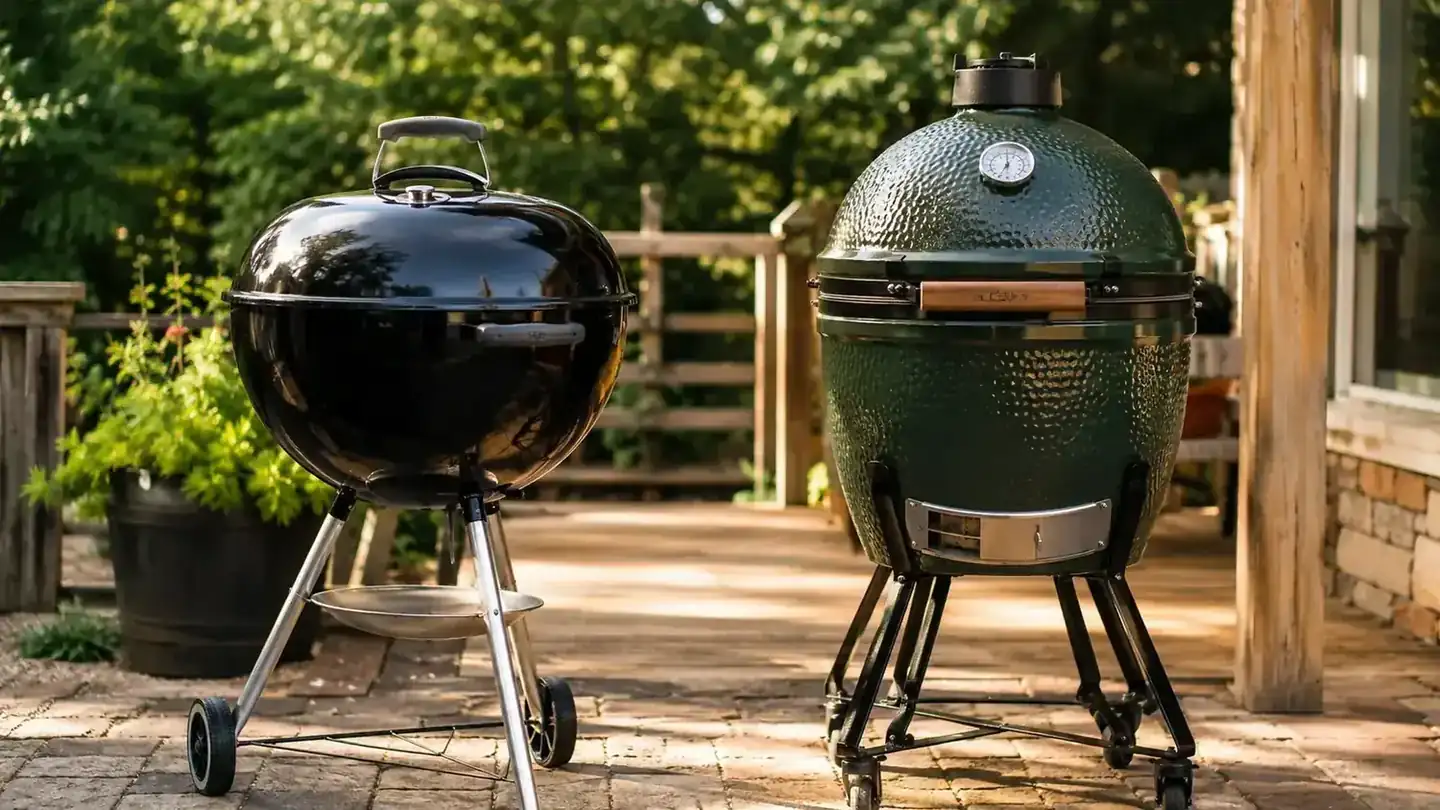
My neighbor showed up last summer with a brand-new kamado ceramic grill, paid somewhere north of seven hundred dollars for it, and spent the first two sessions fighting temperature swings he could not explain. Meanwhile I was on my third summer with the Weber Original Kettle Premium 22-inch, cranking out perfectly smoked ribs and two-zone grilled chicken without a second thought. I am not telling you that to brag. I am telling you because I have been in his shoes. I owned a kamado for two years before I sold it, and I came back to a Weber kettle with a real sense of relief.
Both grills cook with charcoal. Both can sear, smoke, and roast. But they are not the same tool, and the wrong choice costs you real money and real frustration. This is my honest comparison, based on time actually cooking on both. The Weber Original Kettle Premium 22-inch is the grill I recommend to almost every backyard cook I talk to, and by the time you finish reading this, you will understand exactly why.
| Weber Kettle | Kamado Grill | |
|---|---|---|
| Street Price | Check today's price on Amazon | Premium investment range |
| Weight | 32 lbs | 162 - 219 lbs |
| Cooking Surface | 363 sq in (22-inch grate) | 262 sq in (BGE large standard grate) |
| Heat Retention | Good (porcelain-coated steel) | Excellent (thick ceramic walls) |
| Max Sear Temp | 500-600 F with open vents | 700+ F possible, but risks thermal shock |
| Low-and-Slow Capability | Very capable with Minion method | Excellent, holds 225 F for 12+ hours |
| Portability | Rolls easily on two wheels, 32 lbs | Stationary, requires dedicated stand or nest |
| Learning Curve | Low, vent logic is intuitive | Moderate, ceramic retains heat aggressively |
| Warranty | 10 years on bowl and lid | Lifetime on ceramics, 1-5 years on parts |
If the kettle sounds like your kind of grill, check today's price before you read any further.
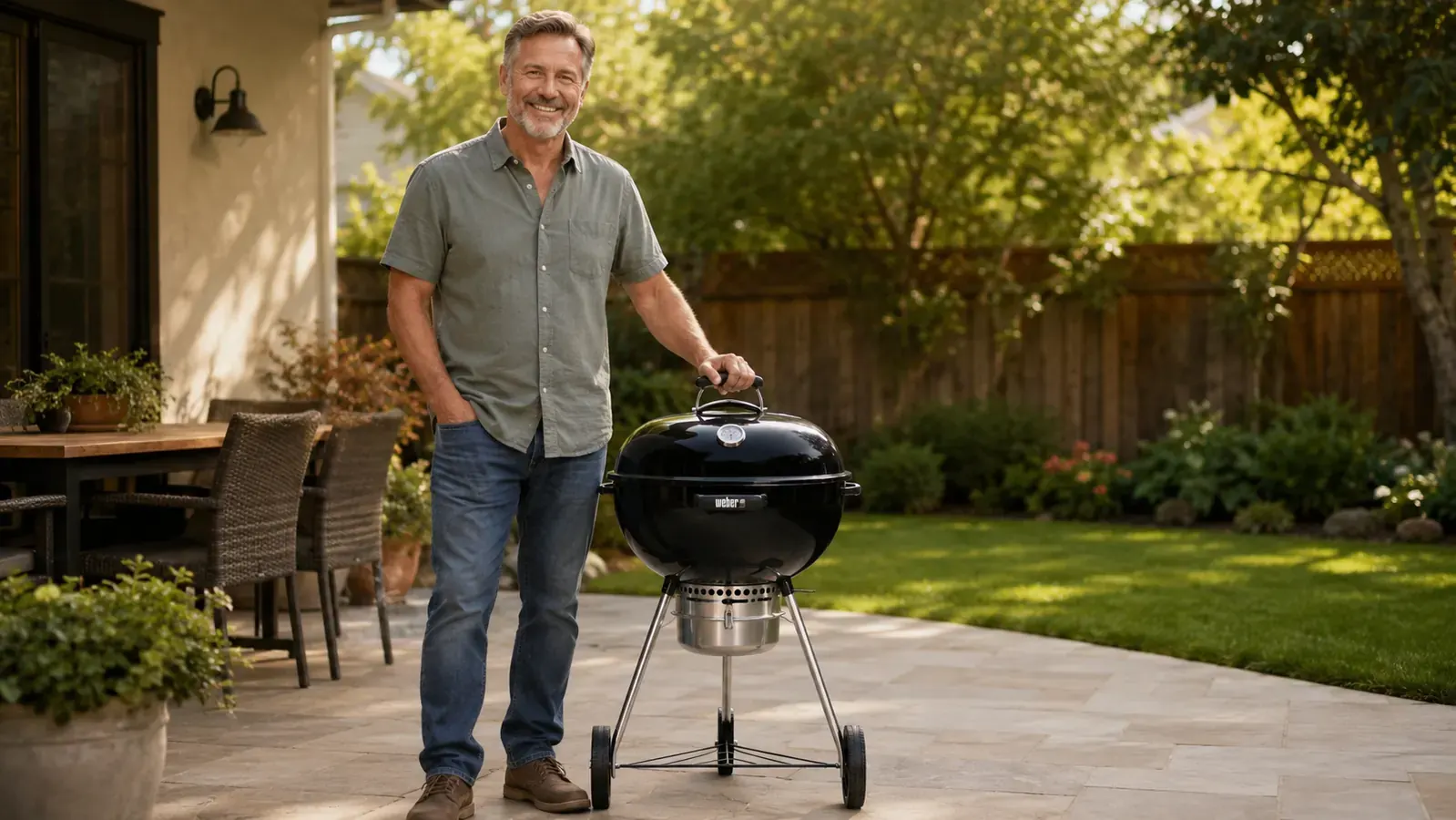
The Weber Original Kettle Premium 22-inch is the grill I cook on every single weekend. It handles everything from a quick weeknight burger to a 6-hour smoke session. Four-point-eight stars across nearly 13,000 reviews says I am not alone.
Amazon Check Today's Price on Amazon →Where the Weber Kettle Wins
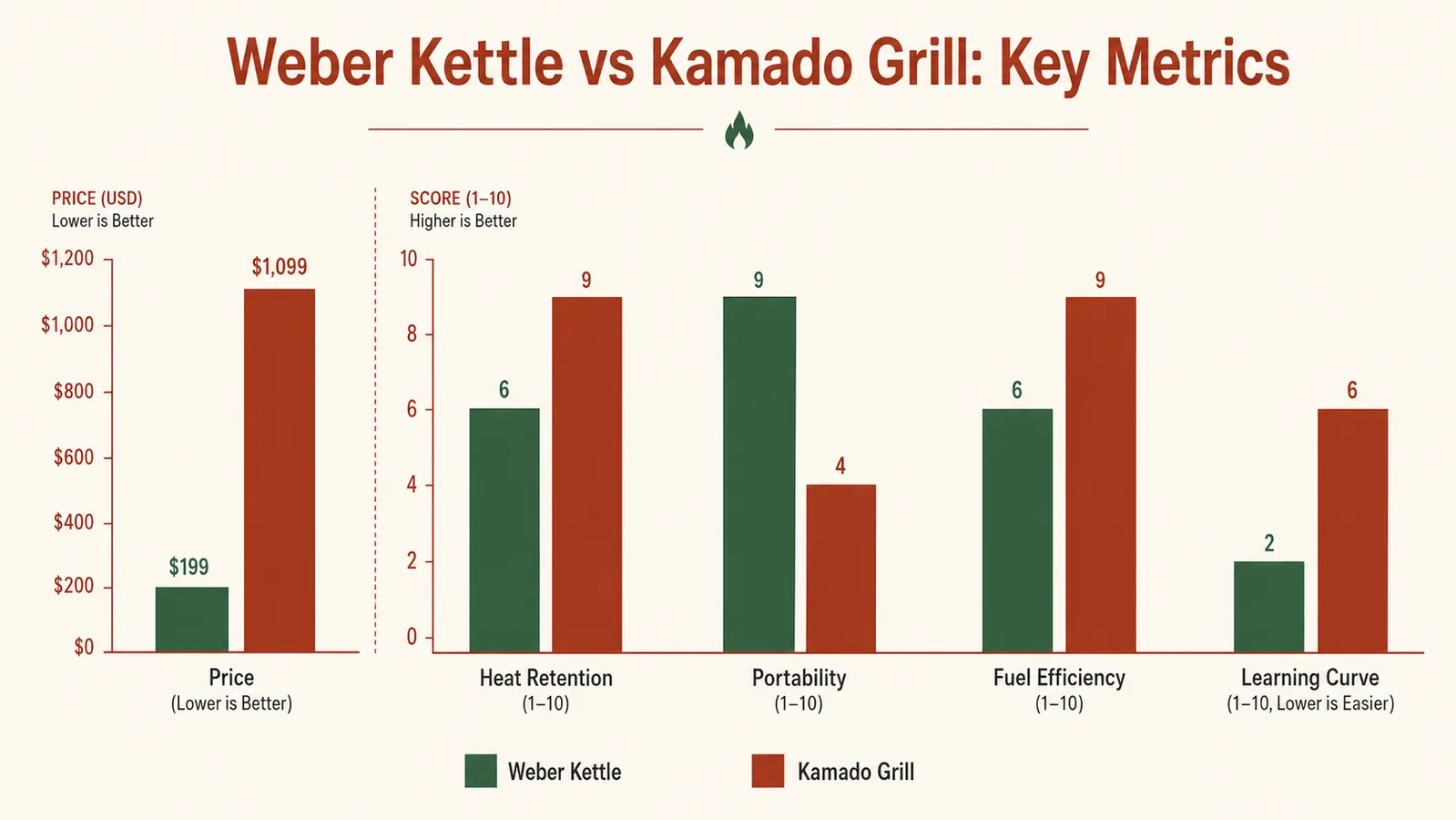
The price gap is the first thing you notice and it never stops mattering. The Weber Kettle Premium 22-inch runs at a mid-range price. A large kamado from a reputable brand will cost you three to five times that before you have cooked a single meal on it. And that number does not include the table or nest the kamado needs to sit on, the ceramic-specific accessories, or the cover. I have watched people spend over a thousand dollars getting a kamado setup they are actually happy with. The Weber ships ready to cook, ash catcher and built-in lid thermometer included.
Weight is the second thing, and it matters more than people expect. My Weber rolls around the patio on two solid wheels, comes with me to a friend's place for a cookout, fits flat in the back of a truck, and lives in the garage over winter without any drama. The large Big Green Egg weighs over 160 pounds and requires a dedicated stand or ceramic table that costs another few hundred dollars on its own. Once you place a kamado, that is where it lives. If you rent, travel with your gear, live somewhere with hard winters, or just like keeping your options open, the kettle wins this category by a wide margin.
Raw cooking surface also goes to the kettle at this price point. The standard 22-inch Weber grate gives you 363 square inches of cooking area. The Large Big Green Egg runs 262 square inches on its standard grate, and you need an aftermarket expansion shelf to approach what the Weber gives you right out of the box. For family cooks where you want a full rack of ribs and a row of thighs running at the same time, the kettle has the real estate advantage.
Then there is the learning curve. A kettle's vent system is forgiving. Open the bottom damper wide, crack the top vent to about a quarter, and the temperature does what you expect in a reasonable amount of time. If it creeps up, you close the vents a little. If it drops, you open them. That feedback is direct and easy to learn. A kamado ceramic retains heat so efficiently that small vent changes have delayed, amplified effects that catch new users off guard. My neighbor overshot his target temperature by 75 degrees on three separate occasions in one afternoon cook, and he is a smart, patient guy. He was just fighting physics he did not expect. Kettles misbehave in ways that are easier to predict and fix.
Where the Kamado Wins
If you are doing long low-and-slow cooks, the kamado genuinely earns its price. Those thick ceramic walls hold heat so well that once you lock in 225 degrees, the grill can coast for 12 to 16 hours with minimal charcoal and almost no vent adjustment. Overnight brisket cooks become manageable in a way they are not on a kettle. A Weber can absolutely smoke a brisket, and I have done it plenty of times, but you will be watching it more carefully, running the Minion method, and probably adding a few fresh coals on a cook that goes past the 8-hour mark. The kamado handles very long cooks with less babysitting.
The lifetime ceramic warranty is also genuinely meaningful if you plan to keep a grill for 20-plus years. Ceramic does not rust or warp the way steel does, and if you crack a ceramic component through thermal shock (the most common failure mode), the manufacturer typically covers it. Weber's 10-year warranty on the bowl and lid is strong for a steel grill and I have no complaints about it, but ceramic has a different kind of longevity built in.
Very high sear temperatures are also a point for the kamado. With full airflow, some models can push past 700 degrees, which creates a crust on a steak that a kettle simply cannot match at the same charcoal quantity. If you are serious about dry-aged steakhouse-style cooks and you have the skill to manage the temperature, that upper range matters. For most weekend cooks, the kettle's 500 to 600 degree range is plenty. But for that specific use case, the kamado delivers more.
A kettle's vent system is forgiving. Open the bottom damper, crack the top vent, and the fire does what you expect. A kamado is a different animal once you push those ceramics past 400 degrees.
The Honest Take on Heat Retention
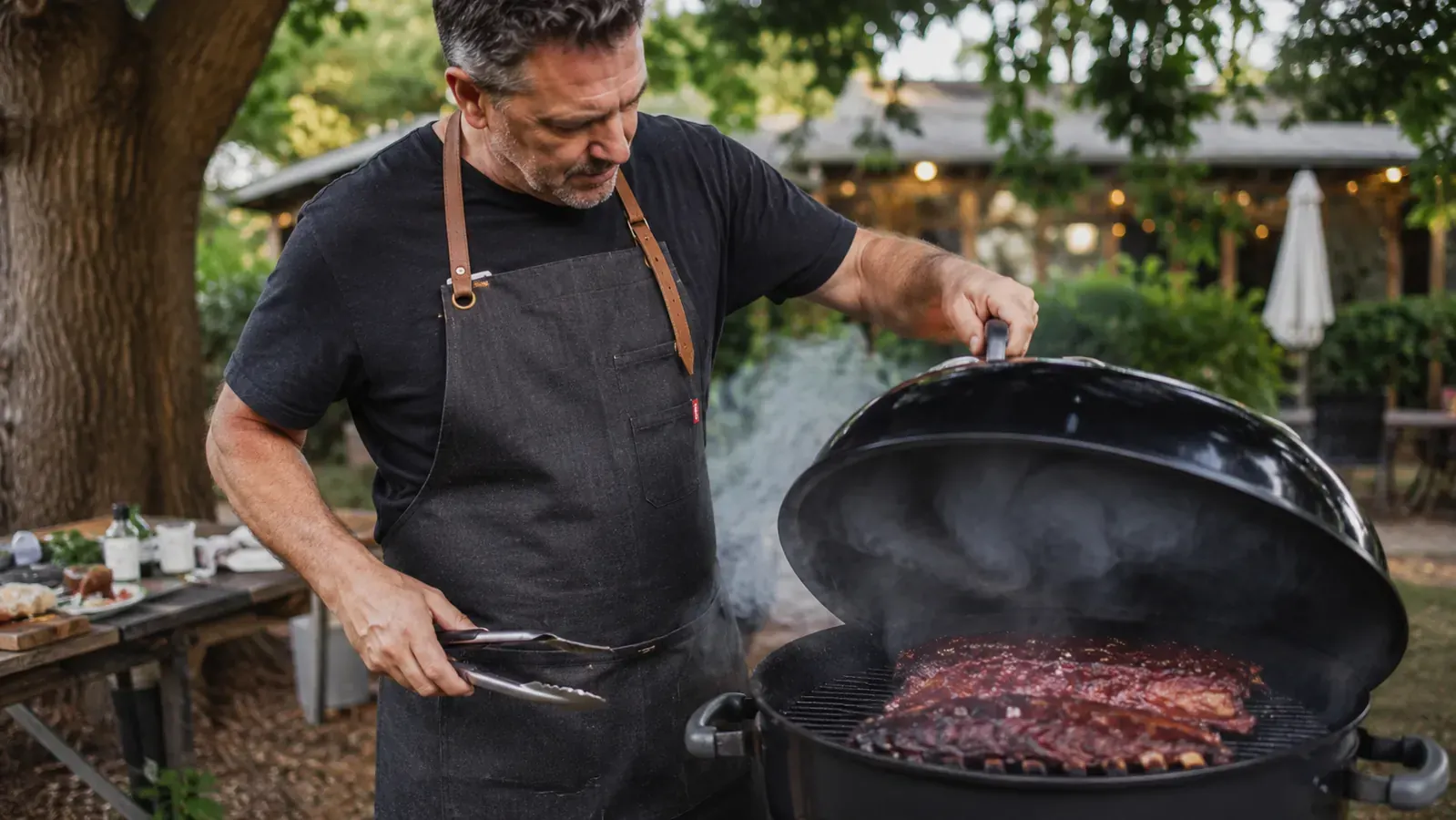
People talk about kamado heat retention like it is magic, and compared to a cheap thin-steel grill, it genuinely is impressive. But the Weber Kettle Premium is not a cheap thin-steel grill. The porcelain-coated steel bowl is well-built and holds heat solidly enough for two-zone smoking, proper indirect roasting, and real sear temperatures. The lid fit is tight. The ash catcher manages airflow from below. I have held 250 degrees for a full 5-hour rib cook on my Weber without struggling.
Where the kamado's heat retention becomes a real, cook-changing advantage is at the extremes: very long cooks past 8 hours and very high heat past 600 degrees. For anything in that middle range, which covers most of what backyard cooks actually do on a Saturday afternoon, the Weber performs close enough to a kamado that the difference will not show up in the flavor of your food. You are mostly paying for the extremes, and you should decide whether those extremes fit your actual cooking.
Who Should Buy the Weber Kettle
You are the right buyer for the Weber Kettle if you grill most weekends but not every day, you want a grill that can smoke, sear, and roast without requiring hours of technique study, and you are not trying to spend over a thousand dollars on a charcoal setup before you have even bought your first bag of lump. You will get better results faster because the grill behaves predictably. You will have money left over for better meat, which makes a bigger difference in the final plate than the grill brand does. And if your situation changes, the grill moves with you. I have steered a lot of people toward this exact grill and not one of them has come back disappointed. For the full picture of how it performs over time, check out my Weber Kettle long-term review.
Who Should Buy the Kamado
The kamado makes sense for a specific kind of cook: someone who already has solid charcoal-grilling experience and knows what they want from an extended low-and-slow setup, someone who cooks for large groups regularly and needs a heat flywheel to smooth out long cooks without constant attention, or someone who wants a single grill that they will never replace and they are willing to pay for that longevity upfront. If you are new to charcoal grilling, the kamado is an expensive place to learn. And if you are honest about your actual cook frequency and what you cook most often, there is a good chance the Weber delivers 90 percent of the experience for less than a third of the cost.
My Final Call
For the large majority of backyard grillers, the Weber Original Kettle Premium 22-inch is the right buy. It costs less, handles more situations gracefully, moves when you move, and teaches you real fire-management skills instead of letting the ceramic do the work for you. Once you know how to manage a kettle's vents through a long smoke, you can cook on almost anything. I have watched the opposite happen with kamado owners who struggle the first time they use any other grill because they have only ever used a tool that compensates for them. The Weber makes you a better cook. That matters long after the purchase.
If you are still working through the bigger question of whether charcoal is the right fuel type for your setup at all, I wrote about that too. Take a look at 10 reasons charcoal beats gas for serious backyard cooks before you lock anything in. It might settle the whole question before you compare specific grills.
Ready to cook on a grill that handles everything without the ceramic price tag and the learning curve?
The Weber Original Kettle Premium 22-inch has 4.8 stars across nearly 13,000 reviews and a 10-year warranty. It has been the standard for backyard charcoal cooking for decades, and the current version is the best it has ever been. Check today's price and see if it fits your budget.
Amazon Check Today's Price on Amazon →