
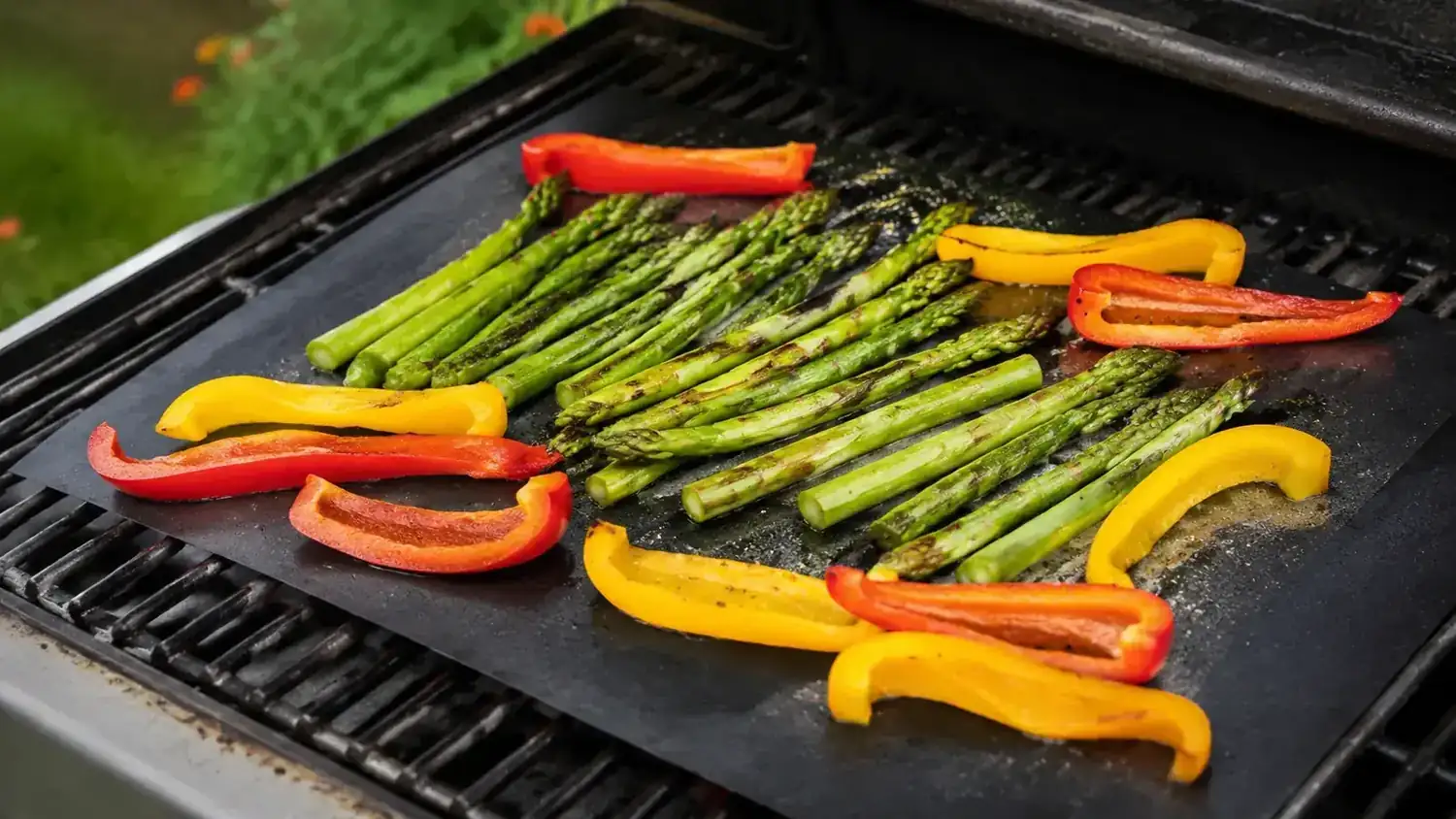
I will be straight with you: I bought this Grill Mat Set of 6 mostly because my son-in-law kept losing shrimp through the grates and I was tired of watching him fish them out with a fork. I figured if the mats held up for one season, they would pay for themselves in shrimp alone. What I did not expect was to still be using the same mats five months later, cooking everything from asparagus to over-easy eggs on them. This review covers a full grilling season on a 22-inch Weber charcoal kettle, including every food I tried, every mat I burned through or did not, and the real conditions under which these things earn their keep.
The set comes with six 15.75 x 13-inch black PTFE mats, which means you can rotate them so no single mat takes all the abuse. That detail matters more than it sounds, and I will explain why below. For now, the short answer is that these mats genuinely work for the foods they are designed for, they clean up in about 30 seconds, and the biggest limitation is one most buyers never consider until their first cook on a charcoal grill with the lid down.
The Quick Verdict
A legitimately useful tool for delicate foods, vegetables, and cleanup-averse cooks, with one important temperature limit you need to understand before you buy.
Amazon Check Today's Price →If shrimp, fish, or vegetables keep falling through your grates, this is the fix.
The 6-pack gives you enough mats to rotate across a full season without burning any single one out. Check today's price on Amazon.
Amazon Check Today's Price on Amazon →How I Tested These Mats Over a Full Season
My setup is a Weber Original Kettle 22-inch charcoal grill in the backyard of a house in central Florida, where grilling season runs basically year-round. I started using this mat set in early spring and ran it through summer. I cook two to four times a week, so by the end of the season I had done somewhere north of 60 cooking sessions across all six mats. I rotated them evenly and marked each one with a small scratch on the corner so I could track which had seen the most heat.
Foods I cooked on the mats over the season: jumbo shrimp (shell on and peeled), salmon fillets, tilapia, whole asparagus stalks, zucchini rounds, mushrooms, onion rings, cherry tomatoes, halved bell peppers, pork chops, bone-in chicken thighs, thin-cut ribeyes, smash burgers, and, on a slow Sunday morning in April, three over-easy eggs just to see what would happen. I also tested them on a propane side burner, not just the kettle, to get a read on gas grill behavior.
I did not use a timer or a lab. I cooked the way I always cook: by feel, by smell, by how the bottom of a piece of salmon looks when you slide a spatula under it. That is the test that matters for most people reading this.
What the PTFE Surface Actually Does for Your Food
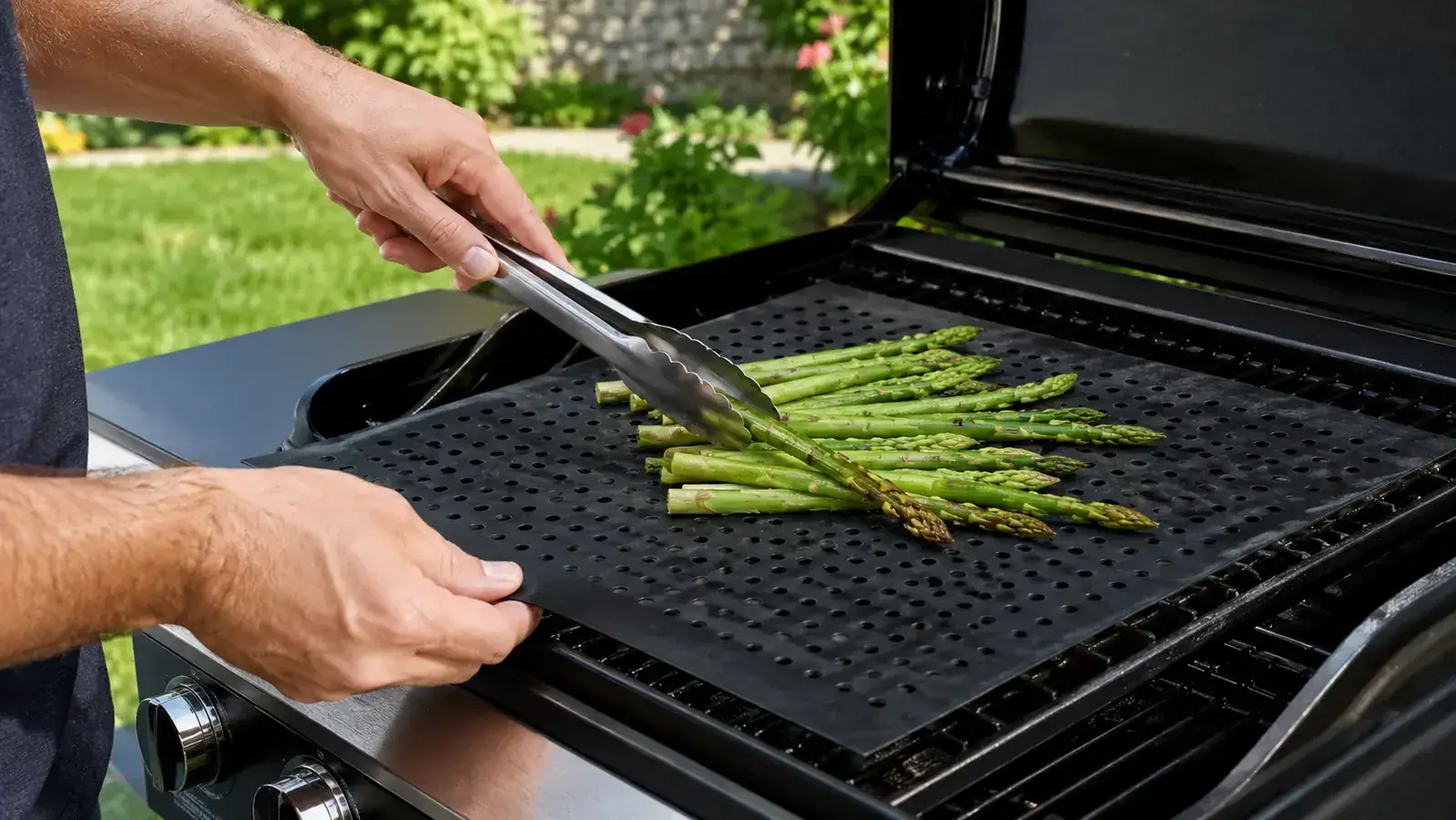
PTFE stands for polytetrafluoroethylene, which is the same non-stick coating used on quality cookware. On the grill, it creates a surface that food releases from cleanly without the need for spray oil, which is a genuine convenience. Shrimp pull off with a spatula lift instead of a tearing peel. Salmon skin stays attached to the fillet instead of welding itself to the grate. Cherry tomatoes do not blow apart when you try to flip them.
What the coating does not do is give you grill marks. If grill marks matter to you, the mat is not your tool. I use the mat for the first two-thirds of a cook on things like chicken thighs, then slide the mat out from under them for the last few minutes on the bare grate to finish them off and get some char. That two-stage approach works well and gets you the benefits of both the mat and the direct grate contact.
The 15.75 x 13-inch footprint covers most of the usable cooking area on a 22-inch kettle. You can fit two mats side by side on a larger grill if you need the full surface. One mat at a time was enough for the way I cook, which is usually one protein and one vegetable side at once. If you routinely cook for a larger group, keep that in mind when deciding how many mats to lay down at once.
Salmon skin stayed attached to the fillet every single time. That alone made the mats worth keeping on the shelf all season.
The Temperature Limit Nobody Reads Before They Buy
Here is the thing that catches charcoal grillers off guard: these mats are rated to 500 degrees Fahrenheit. That sounds like a lot until you realize a well-loaded charcoal kettle with the lid off can hit 600 to 700 degrees easily over fresh coals. I scorched the underside of the first mat I used because I put it on too early in the cook, before the coals had calmed down. The surface got the faint chemical smell that means the PTFE is heating past its safe range.
The fix is simple: wait until your charcoal has grayed over fully and your grill temperature has dropped to a steady 400 to 450 degrees before laying a mat down. On a gas grill, medium heat is fine. On charcoal, you need patience. Once I learned that rhythm, I never had the problem again across the remaining five months. On the gas side burner, I never had an issue at all because it is much easier to dial down BTU output than to speed-cool a bed of hot coals.
This is not a flaw unique to this product. It applies to every PTFE grill mat on the market. But most product pages bury the temperature limit in the fine print, and most buyers on charcoal grills discover it the hard way on their first cook. Consider this your heads-up so you do not waste a mat learning what I learned.
Performance on Specific Foods: What Worked and What Did Not
Shrimp: excellent. The whole reason I bought these, and they delivered every single time. No loss through the grates, easy flip, no sticking. Shell-on shrimp released as cleanly as peeled. I now use the mat for every shrimp cook without thinking about it.
Salmon: very good. Skin released cleanly from the mat surface every time, which is the hardest part of grilling fish on bare grates. The mat does not give you crispy skin, but it does give you intact skin, which most people prefer when serving guests. Tilapia was even easier because the fillets are thinner and faster to cook through.
Vegetables: excellent. Asparagus, zucchini, mushrooms, cherry tomatoes, and onions all cooked evenly and released without issue. I cut my vegetable prep time significantly because I stopped worrying about threading things on skewers or hauling out a grill basket. Lay the vegetables flat on the mat, set a timer, and flip once. That is the whole process.
Thin steaks and pork chops: mixed results. The non-stick surface means you lose the direct grate sear, and the mat traps moisture differently than an open grate. Thin ribeyes cooked fine but came out more pan-seared than grilled in texture. For anything I want a real crust on, I skip the mat and go bare grate from the start. That is the honest truth about this tool's limits.
Eggs: actually worked, which surprised me. Cracked three eggs directly onto the mat, lowered the lid to hold heat, and had runny-yolk eggs in about four minutes. Would I do it regularly? No. Was it a fun demonstration that made my son-in-law genuinely reconsider whether a grill mat was just a gimmick? Yes.
Durability After 60-Plus Sessions
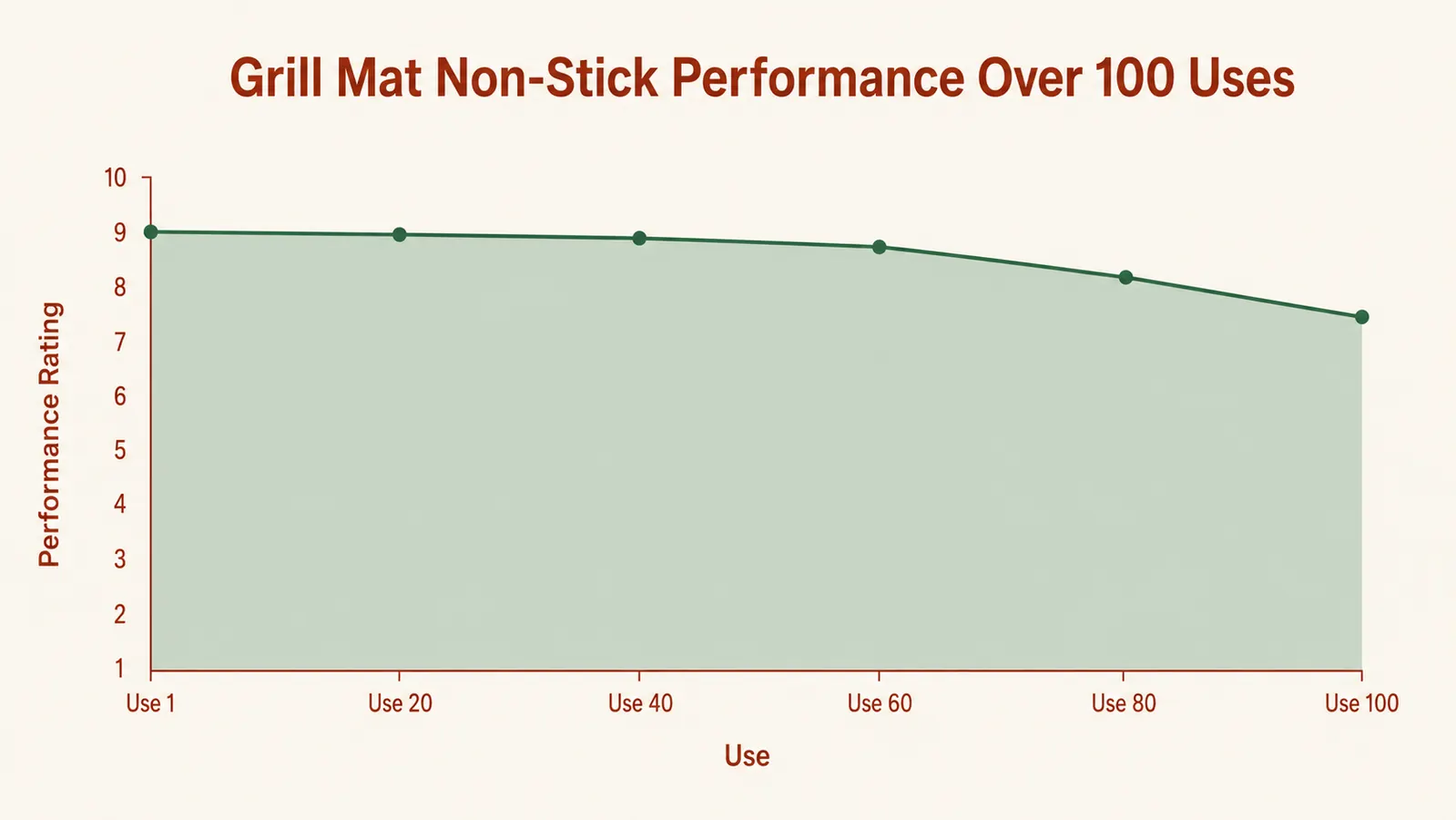
Six months in, I have all six mats. None of them are cracked, warped, or peeling. The two I used earliest have some surface staining from high-fat cooks, like bone-in chicken thighs and pork ribs, but the staining does not affect performance. The non-stick surface still releases food cleanly. If anything, the mats I seasoned heavily with fat seem to release food just as well as the cleaner-looking ones that saw lighter use.
Cleanup is the most underrated feature of this whole product. I rinse the mat under the hose, wipe it with a damp cloth, and it is done. That takes 30 seconds. The mat that spent a full afternoon under a rack of baby back ribs cleaned up in under a minute. I have not used dish soap on any of them, just water and a soft cloth, and they have stayed in good shape all season.
I did push one mat past 500 degrees intentionally just to see what would happen at the edge of the rating. The surface did not crack or peel visibly, but it developed a whitish haze across part of the surface and the next cook left a faint metallic smell on the food. I retired that mat from food contact and now use it as a drip shield under my charcoal chimney starter. The other five are still in active rotation.
Storage is simple: I stack all six mats flat in a kitchen drawer and they take up about as much space as a cutting board. I have seen some grillers roll them, but flat storage keeps the surface from developing any curl that might cause uneven contact with the grate. After five months, none of mine have developed any warping at all.
What We Liked
- Shrimp, fish, and small vegetables cook without any loss through the grates
- Cleanup takes 30 seconds under running water, no scrubbing required
- Six mats means you rotate the cooking load and no single mat wears out fast
- Non-stick release works without spray oil on every cook I tested
- Works on charcoal, gas, and electric grills without any modification
Where It Falls Short
- 500-degree limit requires patience on charcoal and is easy to overshoot with fresh coals
- No grill marks, so not the right tool for steaks or anything you want direct-flame char on
- Surface staining from high-fat cooks is permanent, even when performance stays intact
- At 15.75 x 13 inches, slightly smaller than a full 22-inch kettle cooking grate, so you may want two mats for a large cook

Who This Is For
If you regularly cook shrimp, fish fillets, asparagus, mushrooms, or any small or delicate food that falls through the grates or sticks and tears, these mats are worth having. The same goes for anyone who dreads scrubbing grill grates after a cook. The mat collects all the drips and residue, your grate stays cleaner over time, and cleanup is a 30-second rinse instead of a 10-minute scrub session with a wire brush. People who cook for groups on a gas grill, where temperature control is precise, will find this set especially reliable and easy to work with.
The six-mat format is also worth calling out for people who cook often. One mat taking all the heat every session will wear faster than six mats sharing the load across a season. If you grill three or four times a week the way I do, rotating through a set of six means none of them are overworked and the whole set lasts much longer. That is a smart design choice and one reason I would pick this format over a two-pack or four-pack from a competing brand. For a seasonal comparison of mats versus baskets, see our breakdown at Grill Mat vs Grill Basket.
Who Should Skip It
If your main goal is a classic sear on a thick steak or bone-in chops where the grate marks and direct flame contact are central to the final result, keep these mats on the shelf for side dishes and save the bare grate for your proteins. Also: if you run hot charcoal fires without monitoring your grill temperature, you will fight the 500-degree limit constantly. Either invest five minutes in thermometer work before laying a mat down, or limit mat use to gas for easier temperature control. The mats are not fragile, but they do have a real ceiling that a hot charcoal fire makes easy to breach without realizing it.
One more note on lifespan: reusable does not mean forever. I got a full season out of five of six mats. A casual griller cooking once a week will probably get two or three seasons. Someone who runs hot fires constantly may go through a mat sooner. The six-pack format is smart for exactly that reason: you have backups on hand without a second purchase. And for more ways grill mats earn their place in a backyard toolkit, check out 10 Reasons a Non-Stick Grill Mat Is Worth It.
A full season of shrimp, salmon, and vegetables with almost zero cleanup. This is what the 6-pack is built for.
Six mats in the box means you rotate them across the season. None of them wear out fast. When one eventually goes, you have five more on the shelf. Worth checking today's price before the next cookout.
Amazon Check Today's Price on Amazon →